
Conference lead capture works when you treat it as a process, not a scanner. The badge scan tells you who stopped at your booth. A usable lead also carries why they stopped, what they are evaluating, when they expect to decide and who on your team owns the next step. Build that record before the show, collect it in under a minute at the booth, and put it in your CRM with an owner so follow-up starts the next morning.
This guide is for healthcare practices, dental specialists, law firms, consulting firms, retailers, CPG brands and new businesses that exhibit or sponsor at conferences and trade shows. It also covers what most guides skip: the marketing around the booth, which decides whether the right people walk up and whether anyone follows through afterward.
TL;DR
- Lead retrieval (the organizer’s badge scanner) gives you contact details. Lead capture is the full job: the contact, the context and the next step.
- Before the show, agree on what a usable lead is, build a short qualification form, test it end to end into your CRM and assign an owner for every lead type.
- At the booth, use three to five fixed fields plus a short note. Do not ask for a long form.
- Follow up fast: hot leads within 24 hours, warm leads within a couple of days, cold leads into a nurture sequence.
- Get consent right. California’s privacy law and the federal CAN-SPAM Act both shape what you can do with attendee data and how you email it.
Table of Contents
- What conference lead capture actually means
- Before the show: build the process first
- At the booth: capture, qualify, note
- Follow-up: where most of the value is won or lost
- Privacy and email rules US exhibitors should know
- Perspective
- Where The Artist Evolution fits
- Common mistakes to avoid
- FAQ
- Sources
What conference lead capture actually means
Two terms get mixed up, so define them first.
Lead retrieval is the system the show organizer or its registration partner provides. You license an app for your phone or rent a handheld scanner, scan the code on an attendee’s badge, and receive the registration details that attendee gave the organizer. Usually that is name, company, job title and email, and sometimes phone or industry. It does not tell you what the person asked about, how interested they were or what you promised to send.
Lead capture is the whole job. It includes the scan, but also the qualification answers, the note from the conversation, the consent, the CRM record and the follow-up plan. If retrieval is the receipt, capture is the file your sales team can act on.
One technical point decides your options. Some badge codes hold visitor details directly, while others hold only an ID that the organizer’s system looks up, or data that only the official app can read. A professional society’s lead quality workbook from Pittcon traces the progression from collected business cards and paper forms to rented show systems and universal capture tools, and it advises discussing with the show’s lead capture company how encrypted badge data is handled. So the first question to send the organizer is simple: can we use our own capture method for badge scans, or is the official system required for booth leads?
Before the show: build the process first
Missed leads at conferences are rarely a traffic problem. They are a process problem: the rep did not know what to ask, the form was too long, the scan never reached the CRM, or nobody owned the follow-up. Two to three weeks before the doors open, settle these six things.
1. Define a usable lead in one sentence
Sales and marketing must sign the same definition. A workable one: a person who told your team why they stopped, what they are evaluating and roughly when they expect to decide, and who agreed to a specific next step with a named salesperson. If your 30-day goal is booked consultations or demos, a contact with no agreed next step is a name, not a lead, however senior the title on the badge.
This matters in every sector. A dental specialty group exhibiting at a regional dental meeting wants referring dentists who intend to send cases. A law firm wants general counsel or business owners with a live matter. A CPG brand wants buyers with a reset window. The definition differs; the discipline is the same.
2. Choose three to five qualification fields
Every extra field costs you conversation time. Keep to a short set of picklists that reps can tap in seconds:
- Interest level: hot, warm or cold.
- Product, service line or use case.
- Timeline: this quarter, this year, exploring.
- Role in the decision: decision maker, influencer, researching.
- Next step agreed: meeting booked, send pricing, schedule demo, disqualify.
Add a free-text note field. Fixed picklists drive routing and automation; the note captures nuance no picklist will, and even a 15-second voice dictation works.
3. Write five conversation questions
Print them on a card at the booth or load them into your capture tool so every rep asks the same things:
- What made you stop by?
- Are you looking at options now, or keeping an eye on it?
- When does something need to be in place?
- Who else would weigh in on this?
- What would be a useful next step after today?
The conversation is the point. Scanning technology only records its output, so lead quality depends on what your team asks, not on the device.
4. Connect the capture tool to your CRM and test it
CRM connections usually run through a native integration, an API connection or a middleware tool. Whichever you use, test before you travel:
- Map every form field to a CRM field.
- Scan a test badge, add a note and a score, and book a meeting.
- Confirm the record lands in the CRM with the right owner, the show name and the fields intact, with no retyping.
- Confirm duplicate rules, so a prospect who is already in your database is merged rather than doubled.
If all of that takes under five minutes, the system is ready. If a step stalls, you found the problem at your desk, not on the show floor.
5. Plan for bad Wi-Fi
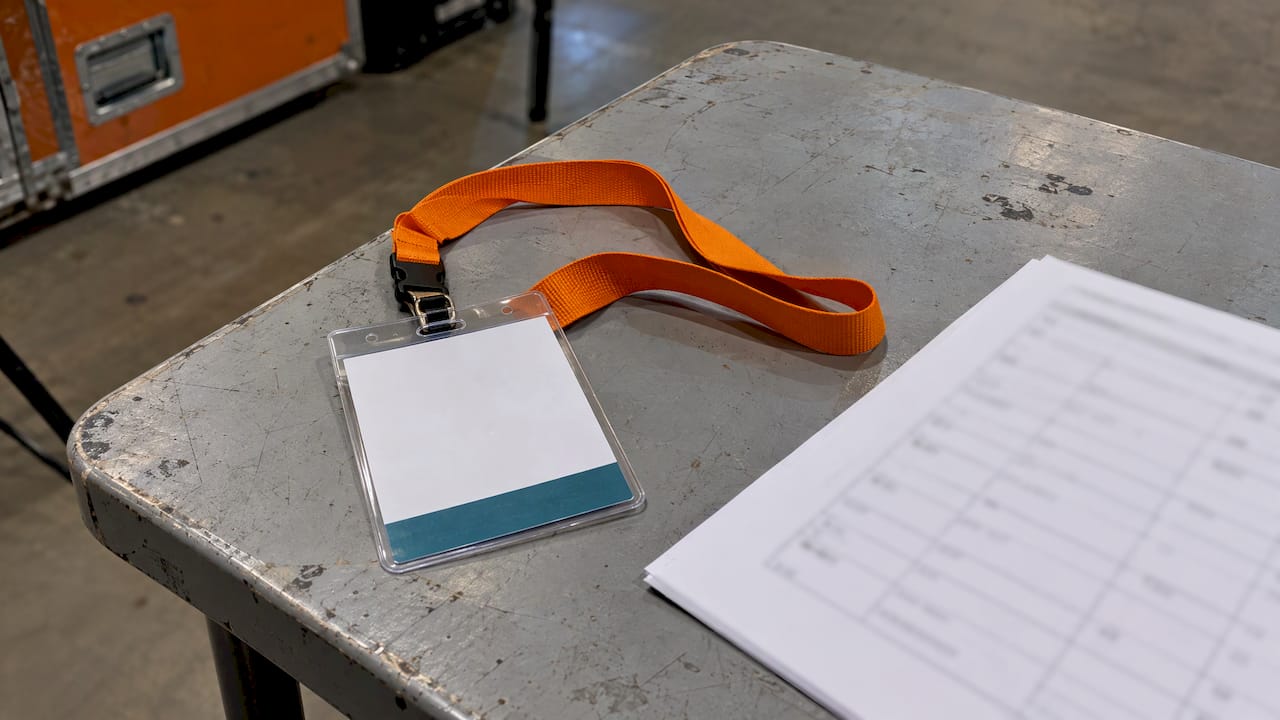
Exhibit halls are notorious for weak connections. Confirm your app queues scans offline, and keep a paper or spreadsheet fallback with the same fields. Print test badges and confirm they scan.
6. Train the team in ten minutes
Give each shift a two-minute script, the five questions and a rehearsal of five practice leads before the doors open. Stage a kit per shift: charged phones, chargers, question cards, collateral and the fallback form.
Do the pre-show marketing, too
The best booth process cannot help if the right people never come. Two to three weeks before the event, direct outreach to your highest-priority prospects so that you arrive with meetings already on the calendar. Request the attendee list from the organizer where it is offered, pick the top 25 to 50 target accounts and assign each an owner. LinkedIn is a natural channel for this: our own LinkedIn ads strategy guide covers how B2B campaigns can reach specific roles, and our LinkedIn outreach case study shows the direct-outreach side of the same approach.
At the booth: capture, qualify, note
A reliable rhythm for each conversation:
- Greet and ask. Start with the first question, not the pitch.
- Scan or enter. Scan the badge, or a business card, or use a QR code that opens a short form. Keep the initial view to name, work email, company and job title. Skip phone fields, which tend to cause the most form abandonment.
- Qualify. Tap the picklists while talking.
- Note. Record a few lines or a short voice note immediately after the person walks away, while detail is fresh.
- Agree the next step. Book the meeting or confirm what you will send, and when.
Most teams use a hybrid setup: one official retrieval license for the badge scans, plus a capture app on each rep’s phone for business cards, QR codes, qualification and notes. After the show, import the organizer’s file into the same list and resolve duplicates so nobody gets two emails.
Set a verification target: a rep should be able to record a lead, with a note, in under 20 seconds. If it takes longer, trim fields.
What to do with the badge data you get
Expect the standard registration details and nothing more. It will not carry budget, timeline, interest or promises you made. That context is yours to add at the booth, which is why a scan alone fails as a lead record.
Follow-up: where most of the value is won or lost
The sales cycle starts when the show ends, not when it begins. Set the rules before you leave the booth.
| Lead temperature | Who follows up | When | How |
|---|---|---|---|
| Hot | Named salesperson | Within 24 hours | Personal email or call that references the conversation note |
| Warm | Named salesperson or SDR | Within about 48 hours | Personalized email, then a nurture cadence |
| Cold | Marketing automation | Within the first week | Added to a nurture sequence over about 90 days |
These windows come from event-industry guidance and exhibitor data rather than a regulator, so treat them as a sensible starting point and compare them against your own results. The direction is consistent across sources: the sooner you contact a lead, the better the response. Build it into the CRM so it happens by default: a hot lead should create a high-priority task due the same day, a warm lead a task due in two days plus a place in an email sequence, and a cold lead should enter a nurture drip with no task at all.
Track actual send times, not intended ones. And personalize: the note you wrote at the booth is the reason to reply. An email that says “great to meet you at the show” and nothing else is the one that gets ignored.
Measure whether capture worked
Set baselines before the show, then compare after:
- Leads captured and the share that met your usable-lead definition.
- Contact rate: the share of leads actually contacted, and how fast.
- Meetings booked on the floor and within 30 days.
- Cost per lead and cost per qualified lead.
- Pipeline created, and revenue closed within 12 months.
A metric worth adding is leads-to-meeting: how many qualified leads become scheduled meetings. Scan counts flatter you; meetings tell you the truth. For the wider method of tying results to spend, see our guide on how to measure marketing ROI. Healthcare exhibitors should also read our guide to HIPAA-compliant marketing before putting any patient-related information into a capture form or CRM.
Privacy and email rules US exhibitors should know
This is general information, not legal advice. If your lead data includes health information or you operate across states or countries, have your attorney or compliance officer review your forms and notices.
California. The California Consumer Privacy Act gives consumers rights over their personal information, including the right to correct inaccurate data, to opt out of its sale or sharing, and to limit the use of sensitive personal information. Businesses it covers must respond to these requests and give notices explaining their privacy practices. If you scan attendees from California, your handling of that data may fall under it.
Email. The FTC’s CAN-SPAM compliance guide for business says its rules apply to all commercial email, and that your “From,” “To” and routing information must be accurate and identify who sent the message. Every post-show email needs a working way to opt out, and you must honor those requests.
Practical habits that follow from both:
- Show a short notice on the scan or form screen saying what happens with the contact details.
- Never use pre-ticked consent boxes.
- Treat consent as separate permissions: attending the event, receiving your post-event email and being shared with a sponsor are different things.
- Record the notice you gave, the capture method and the time, so you can show how each lead was collected.
- If you will also reach EU or UK residents, their rules differ and require explicit opt-in.
Perspective
We have spent 18 years building campaigns for startups and household brands, and the pattern at events is the same every time: the booth is one moment in a much longer marketing system.
The teams that win conferences decide three things early. Who they want to meet, so outreach starts before travel. What a qualified lead is, so the booth team collects the right facts. And who follows up, so the lead never sits in a spreadsheet. That is strategy and execution in one line, and it is how we like to work: as an extension of your team, not a vendor who hands over a report.
A scan counts a visit. A note, a score, an owner and a next step count a pipeline. Build the second one.
Derek
Where The Artist Evolution fits
If you are planning a conference season and want the capture process, the pre-show outreach and the post-show follow-up to work as one campaign, our Strategy & Management service is built for that. We are a full-service agency with brand development, digital advertising, SEO, pay-per-click management and marketing tools under one roof, so the booth message, the landing page and the follow-up emails stay consistent.
Not sure where your current process leaks? Start with a marketing assessment. For examples of lead generation in practice, read our CPG and retail LinkedIn lead generation case study.
Common mistakes to avoid
- Long forms. More than five fields slows the conversation and tempts reps to skip the form.
- Scanning everyone. Scanning passers-by inflates counts and clogs follow-up. Capture people you actually spoke with.
- No owner. A lead without a named salesperson is rarely contacted.
- Unmapped fields. Notes that do not reach the CRM are lost after the show.
- Slow follow-up. Industry research cited by event-marketing publishers suggests that a large share of trade show leads are never followed up at all, which is a recoverable loss.
- Untested badges. Confirm scannability and the official system rules before show day.
FAQ
What is the best way to capture leads at a conference?
Use a digital capture tool to scan the badge or a business card, tap three to five qualification fields and add a short note, all during or just after the conversation. Sync the record to your CRM with an owner. The method matters less than the note and the next step.
What is lead retrieval at a conference?
Lead retrieval is the organizer’s official system for exhibitors to scan attendee badges. You license an app or rent a scanner, and you receive the registration details of each person you scan. It usually covers a single show and does not include the context of your conversation.
Can I use my own app instead of the official scanner?
Sometimes. It depends on how the badge code is built: some hold readable details and others hold only an ID or encrypted data that the official app reads. Ask the organizer before you buy anything, and read the exhibitor manual for any rule requiring the official system for booth leads.
How fast should I follow up with trade show leads?
Contact hot leads within 24 hours, warm leads within about two days and put cold leads into a nurture sequence. Use the notes from the booth to personalize the first message, and track when emails actually go out.
Do I need consent to email people I scanned?
Show a clear notice at the scan or form, and follow the FTC’s CAN-SPAM rules for every commercial email, including accurate sender details and an opt-out you honor. California residents also have rights under the CCPA. Ask your attorney to review your wording.
Sources
- Pittcon: Lead Quality & Conversion webinar workbook
- California Attorney General: California Consumer Privacy Act (CCPA)
- FTC: CAN-SPAM Act: A Compliance Guide for Business