
Privacy safe targeting means reaching the right audience using contextual signals, consented first-party data, and privacy-enhancing technology instead of broad behavioral tracking. The approach that works now blends contextual placement, first-party data governed by real consent, and tools like data clean rooms or trusted execution environments. Google’s confidential matching and the FTC’s COPPA update are the two anchors shaping what’s allowed today.
TL;DR:
- Record consent’s date, purpose, and collection method; set retention limits and remove anyone opting out from every active audience within a defined window.
- Use clean rooms or trusted execution environments for matching and measurement, but favor aggregated outputs because individual level results can trigger state privacy duties.
- Check eligibility before building audiences: Google limits targeting for housing, employment, and finance ads, while targeted ads covered by COPPA require separate, verifiable parental consent.
- Test contextual segments and consented customer lists side by side for two weeks, then use measured performance, not vendor claims, to guide budget shifts.
- Fix consent records, contextual placement, and suppression workflows first; invest in clean rooms, trusted execution environments, or deeper consent upgrades when campaign volume warrants setup.
Table of Contents
- Core approaches: contextual, first-party activation, and privacy-preserving tech
- How to use first-party data responsibly: consent, governance, and activation
- Data clean rooms and TEEs: what they do and where they help
- Platform rules and legal guardrails to check before you target
- How to activate privacy-safe targeting in practice
- Implementation checklist and pre-launch matrix
- Our track record applying privacy-safe targeting across industries
- What to fix first versus what to build over time
- How we can implement privacy-safe targeting for your campaigns
- FAQ
- Sources
Core approaches: contextual, first-party activation, and privacy-preserving tech
Three tactics make up nearly every privacy safe targeting strategy, and each does a different job.
Contextual targeting places ads next to content related to your product, using keywords, semantic analysis, or topic taxonomies. It needs no personal data at all, which makes it the fastest tactic to deploy without a compliance review. First-party data activation uses information customers gave you directly: purchase history, email sign-ups, loyalty program activity. It requires governance but delivers the precision that contextual alone can’t match. Privacy-enhancing technologies, including data clean rooms and trusted execution environments, let you match or measure audiences without exposing raw records to every party in the chain.
No single tactic covers every campaign goal, which is why a blended strategy outperforms any one approach used alone.
- Contextual targeting works best for brand awareness and reaching new audiences at scale.
- First-party activation works best for direct response and retention campaigns where you already have a relationship.
- Clean rooms and TEEs work best for measurement and collaborative analytics where two parties need shared insight without shared data.
A retail brand running a holiday campaign might lean on contextual placement for prospecting, a hashed customer list for retargeting past buyers, and a clean room to measure overlap with a retail partner’s loyalty data. Each layer compensates for what the others can’t do, and together they give you reach, precision, and measurement without relying on cross-site tracking that regulators and platforms are steadily closing off.
How to use first-party data responsibly: consent, governance, and activation
First-party data is only as safe as the consent behind it. The FTC’s enforcement approach treats data collected in contexts where people expect confidentiality as sensitive, even when it’s technically first-party, so the starting point is always documented, affirmative consent rather than a buried opt-out.
- Capture consent explicitly. Record the date, the specific purpose, and the mechanism (checkbox, form, verbal confirmation) for every data point you plan to activate.
- Set a retention schedule. Decide how long each data category stays usable and build automatic expiration into your CRM or CDP.
- Build a suppression workflow. Anyone who opts out needs to be removed from every active list within a defined window, not just the master database.
- Choose a privacy-safe activation pattern. Hashed email or phone lists, cohort-level outputs, and server-side matching all reduce the amount of raw personal data that leaves your environment.
- Document eligibility before you activate. Confirm the data source, consent status, and intended platform match before a campaign goes live.
Pro Tip: Keep a single pre-launch record for every audience, including source, consent date, and suppression status, so a platform or legal review never starts from scratch.
Governance isn’t a one-time setup. Purpose limitation, meaning you only use data for what the customer agreed to, has to be checked every time a new campaign reuses an old list. Our 90-day cookieless marketing roadmap walks through how to rebuild activation around first-party data without losing scale during the transition.
Data clean rooms and TEEs: what they do and where they help
A data clean room is a secure environment where two parties can match or analyze combined data without either side seeing the other’s raw records. A trusted execution environment, or TEE, is the isolated computing space that makes that matching possible: an IAB white paper on TEEs describes them as confidential computing spaces that enable auditable, privacy-preserving processing.
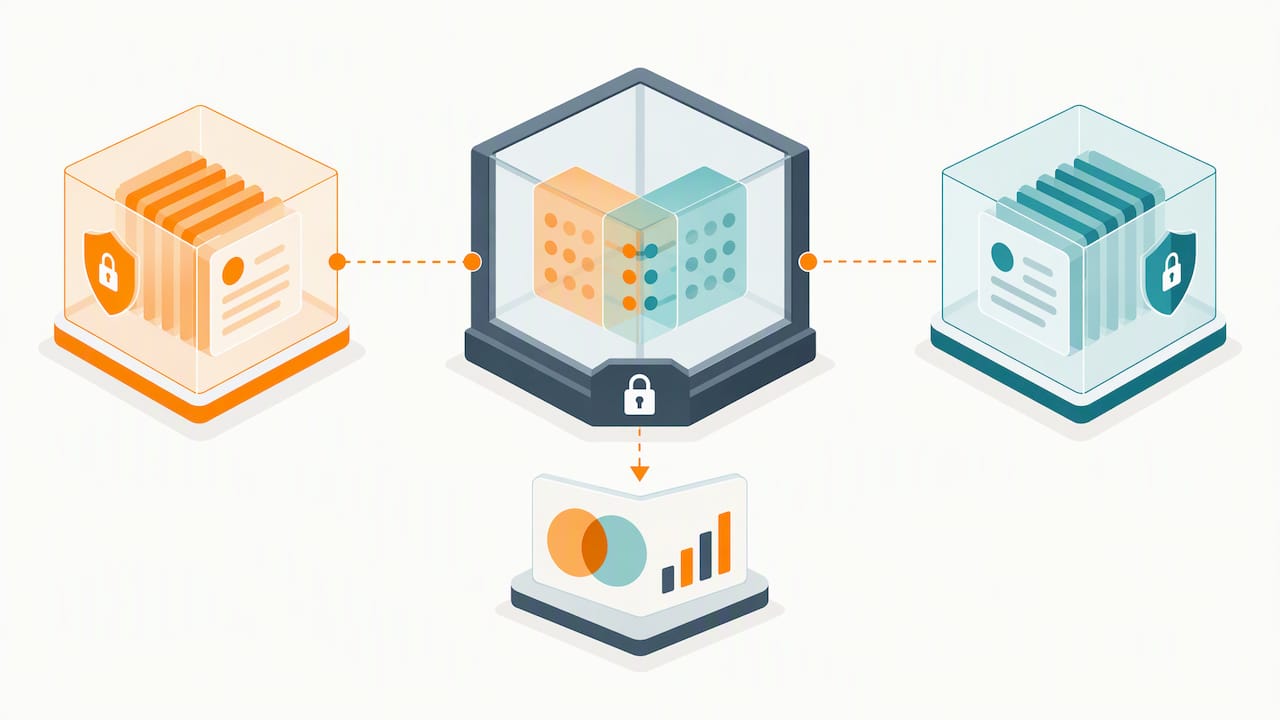
Google’s confidential matching process runs inside a TEE to match a customer list against platform users, which reduces exposure of raw customer records during processing rather than sending them across systems unprotected, according to Google’s own description of the technology.
These tools come with real limits. They reduce exposure, they don’t replace governance, and IAB’s analysis of data clean rooms under U.S. state privacy law is clear that aggregated or deidentified outputs typically avoid triggering a legal “sale,” while individual-record outputs can still create obligations under state law.
- Clean rooms and TEEs fit measurement, where you need to know campaign overlap without sharing customer lists outright.
- They fit collaborative analytics between a brand and a retail or media partner.
- They fit selective audience augmentation, where a small, well-defined segment gets matched without bulk data transfer.
Treat them as an exposure-reduction layer you add to governance, not a substitute for it.
Platform rules and legal guardrails to check before you target
Platform policy and regulation now do more to shape targeting options than any technology choice. A few rules consistently trip up campaigns that otherwise look compliant.
- Google restricts advertiser-curated audiences for sensitive categories and limits demographic or ZIP-code targeting for housing, employment, and consumer finance ads.
- The January 2025 COPPA rule update requires separate, verifiable parental consent before running targeted ads covered by the rule, which changes how child-directed campaigns need to be built from the ground up.
- The FTC’s enforcement priorities on surveillance pricing focus on confidential contexts and deceptive data uses, a signal that “technically first-party” won’t shield a campaign that violates a reasonable expectation of privacy.
- State privacy laws affect how clean room outputs are classified, since an individual-level output can trigger “sale” or opt-out obligations that an aggregated output avoids.
The operational fix is simple: add a policy eligibility check to every campaign build, before creative or audience work starts, not after. A campaign that clears platform policy on day one can still fail a state law review weeks later if the audience source or output format changes.
How to activate privacy-safe targeting in practice
Turning strategy into a live campaign comes down to four moves: choose your contextual signal, align creative, measure without exposing raw data, and retarget safely.
- Pick the right contextual layer. Keyword-level targeting works for search and display, semantic analysis catches intent that exact keywords miss, and topic taxonomies group content at scale for broader placements.
- Match creative to context, not just audience. An ad for running shoes next to a marathon training article performs differently than the same ad placed through broad behavioral targeting, because the environment itself signals intent.
- Align your landing page with the ad’s context. A mismatch between what the context promised and what the page delivers raises bounce rates and wastes the relevance you built with contextual placement.
- Measure using aggregated or clean room outputs. Report on campaign performance using deidentified or aggregated data, and make sure suppression lists are applied before any measurement pull, not after.
- Retarget through cohorts, not individual tracking. Group past visitors into interest or behavior cohorts rather than pixel-based individual retargeting, which keeps re-engagement useful without reviving the exposure issues a blended strategy is built to avoid.
Pro Tip: Test contextual and first-party segments side by side in the same campaign for two weeks before reallocating budget. The performance gap tells you where to invest next, not a vendor’s claim.
Geofencing is a useful middle ground here: it targets by location without requiring persistent device tracking, and our geofencing advertising guide covers how to pair location signals with creative the way contextual targeting pairs content with intent.
Implementation checklist and pre-launch matrix
Before any campaign goes live, run it through this sequence:
- Verify the audience data source and confirm consent is documented, not assumed.
- Apply current suppression lists for every opted-out contact.
- Check platform eligibility rules for the audience category and ad type.
- Decide whether a clean room or TEE is needed for matching or measurement.
- Confirm creative and landing pages align with the targeting context.
- Lock the measurement plan, including which outputs are aggregated versus individual-level.
A pre-launch matrix should capture: audience source, consent status, age range, category sensitivity, geography, platform restrictions, and measurement output type. Campaigns touching children’s data, health conditions, financial status, or housing and employment eligibility need an extra triage step: treat these as high-risk by default and route them through a compliance check before the audience is ever built, not after the creative is approved.
Our track record applying privacy-safe targeting across industries
Over many years, campaigns have been built for clients across retail, healthcare, legal, and entertainment, which means sensitive-category restrictions and consent requirements have been navigated before they became industry-wide priorities. Our LinkedIn outreach case study shows how a consent-based, first-party approach to professional audience targeting produced measurable engagement without relying on broad behavioral tracking.
We’ve also documented our approach to platform compliance in sensitive verticals, including a 12-step guide to compliant Facebook ads for clinics, and our consent mode v2 implementation guide for marketers upgrading their measurement stack ahead of stricter enforcement.
What to fix first versus what to build over time
Most teams overestimate how much new technology they need and underestimate how much their consent records are already costing them in wasted ad spend. Contextual targeting, first-party list hygiene, and suppression workflows are quick wins: they cost little, require no new infrastructure, and fix the most common compliance gaps immediately.
Data clean rooms, TEEs, and deeper consent upgrades are medium-term investments that pay off once your campaign volume justifies the setup work. Bring in a full-service agency or legal counsel when a campaign touches a sensitive category or when your own team can’t answer the consent question for a given list with certainty.
— Derek
How we can implement privacy-safe targeting for your campaigns
Campaigns that combine contextual placement, consented first-party activation, and privacy-preserving measurement can be built and managed, so you get reach and precision without the compliance guesswork. Our campaign strategy and ongoing management service handles the audience architecture, platform eligibility checks, and creative alignment this approach requires.
If you’re not sure where your current data practices stand, our marketing assessment reviews your first-party data hygiene and campaign eligibility before you spend another dollar on audiences that might not clear platform policy. Reach out to get a read on where your targeting stands today.
FAQ
What are the three main pillars of privacy?
Privacy frameworks generally rest on consent, data minimization, and security, meaning people agree to how their data is used, only the data needed for a stated purpose is collected, and that data is protected from unauthorized access. In advertising specifically, this translates to documented consent, purpose-limited data use, and exposure-reducing technology like the TEEs IAB describes.
What are examples of targeted advertising?
Targeted advertising includes contextual ads placed next to relevant content, first-party retargeting of past customers using consented email or purchase data, and audience matching through platforms like Google’s confidential matching. Each example varies in how much personal data it requires, with contextual targeting needing none and matched audiences needing the most governance.
How do I protect consumer privacy while targeting ads?
Protect consumer privacy by securing affirmative consent before using personal data, honoring suppression requests promptly, and favoring contextual or aggregated approaches over individual-level tracking. Using a trusted execution environment or data clean room for matching and measurement also limits how much raw data changes hands during a campaign.
What is a key privacy concern related to targeted advertising?
A key concern is that data collected in a context where people expect confidentiality, such as health or financial information, can still be used for advertising even when it’s technically first-party. The FTC’s enforcement focus treats these confidential contexts as sensitive regardless of the data’s technical source, which is why sensitive-category campaigns need extra scrutiny before launch.
How does the 2025 COPPA update affect targeted advertising?
The January 2025 COPPA rule update requires separate, verifiable parental consent specifically for targeted advertising covered under the rule. Campaigns that could reach child-directed audiences need this consent documented before any targeted ad activity begins, not folded into a general terms-of-service agreement.
Sources
These documents form the factual backbone of current privacy-safe targeting practice, and each one addresses a different piece of the puzzle: regulation, platform policy, or technical infrastructure.
- Google: Confidential matching and data privacy
- FTC: Finalizes changes to Children’s Online Privacy Protection Rule
- IAB: Trusted Execution Environments in digital advertising (April 2025)
- Google: Restricted targeting in personalized advertising (Google help)