
Facebook ads management is usually priced one of three ways: a flat monthly retainer, a percentage of your ad spend, or a blend of the two. Industry surveys put percentage fees at roughly 10% to 25% of spend, and most agencies bill on a flat fee. The number on the quote matters less than what it covers, how complex your campaign is, and whether the fee is separate from the money you pay Meta.
This guide explains each model, what drives a price up or down, how to read a proposal, and when paying an agency beats hiring in-house. We run paid social for clients across healthcare, legal, retail and consumer brands, so we also say where we do not publish a price and why.
TL;DR
- Two separate costs: your ad spend goes to Meta; the management fee goes to whoever runs the account. Always ask for both figures.
- Common models: flat retainers lead the market, and percent-of-spend fees typically run 10% to 25%. Blended models add a base fee plus a percentage.
- Complexity beats budget size: a regulated, tracking-heavy campaign costs more to manage than a broad awareness campaign with a larger budget.
- Our pricing: The Artist Evolution does not publish rates. We scope each account after a look at your goals, tracking and industry.
Table of Contents
- Ad spend and management fee are two different bills
- The four pricing models, side by side
- What actually moves the price
- What a good scope includes
- Is $10 a day or $500 a month enough?
- Agency or in-house hire
- Perspective: why we scope instead of posting a price
- Healthcare and legal: extra cost, extra care
- How to read a proposal before you sign
- A worked example
- Where The Artist Evolution fits
- FAQ
- Sources
Ad spend and management fee are two different bills
Most confusion in this keyword comes from mixing two things.
Ad spend is what Meta charges you for impressions, clicks or leads. You set the daily or lifetime budget, and Meta bills your payment method directly. A management agency does not control this price. It controls how well the money performs.
Management fee is what you pay a person or team to plan, build, launch, monitor and improve campaigns. This is what “Facebook ads management pricing” refers to.
A healthy proposal names both. If a quote says “$2,000 a month” and does not say whether that includes media, ask. Some agencies bundle spend into a single figure and keep a margin on it. Others bill the fee only and you fund the ad account yourself. The second structure is easier to audit, because you can see every dollar Meta charged in your own Ads Manager.
The four pricing models, side by side
| Model | How it works | Where it fits | Watch out for |
|---|---|---|---|
| Flat monthly retainer | Fixed fee for a defined scope | Steady budgets, predictable planning | Scope creep, vague deliverables |
| Percentage of ad spend | Typically 10% to 25% of monthly media | Scaling budgets, e-commerce | Fee rises even if results do not |
| Blended (base plus percent) | Smaller retainer plus a share of spend | Growing accounts with creative needs | Two numbers to track |
| Hourly or project | Billed per hour or per build | Audits, one-time setups, short tests | Hours add up, no ownership of results |
The split in the market is visible in Credo’s pricing survey: 51.8% of providers offer flat-fee billing, and 23.9% use a flat fee plus a percentage of spend. The same survey reports that 59% of social ads providers charge between $100 and $200 per hour, and 34.10% have a single-project minimum between $1,000 and $3,000.
Those are market-wide survey figures, not our rates. Treat them as a sanity check on any quote you receive.
Flat retainers
A retainer buys you a team’s attention for a month. It gives you a stable line in the budget and lets the agency plan creative testing without watching the clock. The risk is a thin scope, so ask what is in it: number of campaigns, creative refreshes per month, reporting cadence, calls.
Percentage of spend
Percent-of-spend fees scale with your media. That is fair when the workload grows with the budget, and awkward when it does not. A fee of 15% on $3,000 a month is $450, which rarely covers a real strategy, creative testing and reporting. At that level, expect a minimum fee. A fee of 15% on $60,000 is $9,000, which should come with serious creative production and analysis.
Blended models
A base retainer covers the fixed work: account structure, tracking, reporting. A smaller percentage then rewards scaling. Many growing advertisers end up here because it matches how the work actually behaves.
Hourly billing
Hourly rates suit a one-off audit or a tracking fix. They are a poor fit for ongoing management, because the most valuable work is optimization, and it does not map cleanly to hours. PricingLink’s guide to charging for Facebook and Instagram ads management walks through the same trade-offs from the provider side.
What actually moves the price
Budget size is the obvious driver. It is not the biggest one. Industry guidance notes that campaign complexity is a larger price driver than budget. A dental practice running local lead generation with strict, privacy-conscious funnel tracking can command a higher management fee than an e-commerce brand running broad awareness ads, even when the practice spends less on media.
Here is what pushes a quote up:
- Regulated industries. Healthcare, legal and financial advertisers need extra review of ad copy, landing pages and data handling.
- Tracking setup. Pixel and server-side event setup, CRM connections, offline conversion imports and call tracking take real build time.
- Creative volume. Static images are cheap to test. Video, user-generated content and multiple formats per month are not.
- Number of audiences and offers. Ten locations or five service lines means ten or five structures to manage.
- Reporting depth. A one-page monthly summary costs less than weekly dashboards and strategy calls.
- Landing pages. If your site converts poorly, no media buyer can fix that from inside Ads Manager.
And what pulls it down: one clear offer, clean tracking already in place, a small number of campaigns, and creative you can supply yourself.
What a good scope includes
When you compare two quotes, line up the deliverables, not the totals. A solid Facebook and Instagram management scope covers:
- Account audit and goal setting tied to leads, sales or booked appointments
- Tracking and conversion setup, verified before launch
- Campaign and audience structure
- Ad creative, or a clear creative brief and revision process
- Weekly monitoring and budget adjustments
- Structured testing of creative, copy and audiences
- Monthly reporting that connects spend to business outcomes
- A named contact and a regular call
If a proposal lists “campaign management” and nothing else, ask for the list above in writing.
Is $10 a day or $500 a month enough?
Small budgets are a common search around this keyword. Meta does let you start small, and you can pause at any time. The real problem is arithmetic. A management fee of $1,000 a month on a $300 media budget means you pay more for management than for ads, and the campaign may never gather enough conversions for the system to learn.
If your budget is small, the sensible options are:
- Run it yourself for a few months to learn what a lead costs you, then hire help.
- Pay for a one-time setup and audit, then maintain the account in-house.
- Concentrate spend on one offer in one region rather than spreading thin.
We cover how to divide budget across channels in our piece on PPC budget allocation and fixing tracking first. The advice applies to Meta as much as search.
Agency or in-house hire
A full-time specialist looks cheaper than a retainer until you add what surrounds the salary. Credo’s data cites an average US salary of about $61,513 (Indeed, 2022) for such a role, and that figure excludes software, continuing education and the time it takes to work through new algorithm learning phases, as Credo notes. An agency fee is usually all-in for a team: strategist, media buyer, creative and analyst, working from an established playbook from day one.
In-house wins when you spend heavily and continuously, and have enough work to keep a specialist busy and growing. An agency wins when you need several skills at once, want speed, or need coverage when someone is out.
Perspective: why we scope instead of posting a price
We get asked often why our Facebook and paid social pricing is not on the site. The honest answer is that two businesses with the same budget can need very different amounts of work.
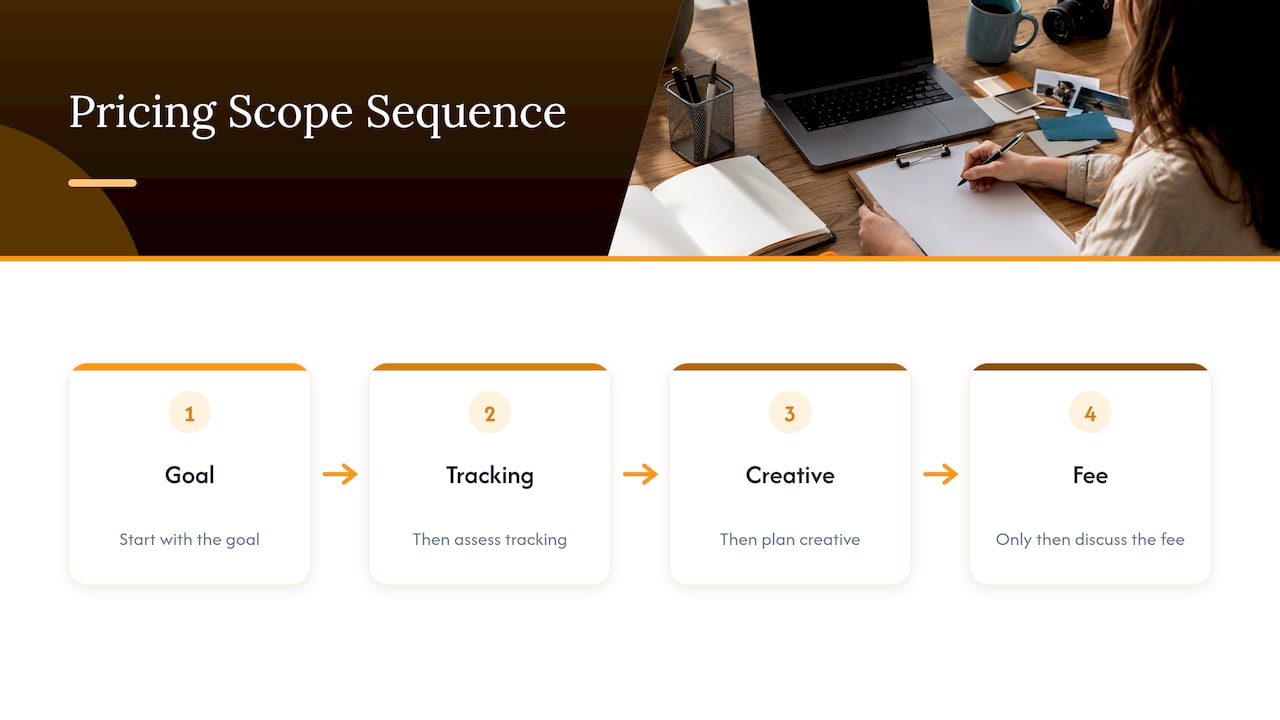
After more than 18 years in business, we have seen how often the budget is the least informative number in a brief. A dental specialist who needs booked consultations, clean tracking and ads that will not trigger account flags is a different job from a retailer promoting a seasonal sale. A legal firm struggling with visibility is a different job again. So we start with the goal, then the tracking, then the creative, and only then talk about a fee.
Our view is that the fee should follow the work and the work should follow the goal. That is why our in-house, multidisciplinary team handles strategy and execution together, rather than handing you a plan and leaving you to build it. If you want a number you can compare, ask for scope, deliverables and reporting cadence in writing, from us or anyone else.
— Derek
Healthcare and legal: extra cost, extra care
Regulated advertisers should expect to pay more for management, and should be wary of quotes that ignore why.
The Federal Trade Commission’s advertising and marketing guidance says claims in ads must be truthful, not deceptive or unfair, and evidence-based. For testimonials, the FTC’s Endorsement Guides require that endorsements be truthful and not misleading. If you run patient or client stories in ads, your marketer should review them against those guides, and a lawyer or compliance officer in your practice should sign off on the final copy.
Healthcare adds privacy questions. Before you place a tracking pixel on a page that touches patient information, talk to your compliance counsel or privacy officer. Our guides on HIPAA-compliant marketing and compliant Facebook ads for clinics explain the practical steps on the marketing side. They are not legal advice.
This extra review is real labor, and it is a legitimate reason for a higher fee.
How to read a proposal before you sign
Use this checklist on any quote, ours included.
- Is ad spend separate from the fee? Both should be named.
- Who owns the ad account and pixel? It should be you.
- What is the contract length and exit clause? Month-to-month after an initial period is a good sign.
- What are the deliverables per month? Count creative assets, calls and reports.
- Which metric defines success? Leads, booked appointments and revenue beat impressions and clicks.
- Who does the work? Ask for the team, not only the salesperson.
- How is tracking verified? Ask how they confirm conversions are counted correctly.
Be cautious of guaranteed return promises. No one controls auction prices, and the FTC expects results claims to be backed by evidence.
A worked example
Suppose a regional dental group wants new-patient consultations from Facebook and Instagram across three locations. It plans $6,000 a month in media.
- Under a percentage model at 15%, the fee would be $900. That is thin for three locations, compliant creative and call tracking, so a reputable agency would add a minimum.
- Under a flat retainer, the fee reflects the scope: three location structures, monthly creative, tracking and reporting.
- Under a blended model, a base fee covers the fixed work and a small percentage grows with spend.
These figures are an illustration of the arithmetic, not a quote. The right choice depends on how much work the account needs.
Where The Artist Evolution fits
If you want paid social run by a team that also handles strategy, creative and reporting, our pay-per-click management service is built for that. We work with healthcare providers, dental specialists, legal firms, retailers, consulting firms and CPG brands, and we act as an extension of your team. Not sure where to start? A marketing assessment shows what your account needs before you commit to a fee, and our campaign strategy and ongoing management service covers the long-term work. If search is also on your list, see our Google Ads management page.
FAQ
How much does Facebook ads management cost per month?
It depends on the model. Surveys show most providers use flat fees, and percentage fees typically run 10% to 25% of ad spend. Your quote should rise with the complexity of the work, not only the size of your budget.
Should I pay a percentage of ad spend or a flat fee?
A flat fee gives predictable costs and suits steady budgets. A percentage suits fast-scaling accounts but can reward spending rather than results. Many advertisers choose a blend: a base retainer for the fixed work plus a small percentage as spend grows.
Is $500 enough for Facebook ads?
It is enough to test one offer in one area, and Meta lets you pause whenever you like. It is not enough to cover an agency fee and produce meaningful data. At that level, set up the account carefully and manage it yourself, or buy a one-time audit.
Does the management fee include ad spend?
Not unless the proposal says so. Ad spend is paid to Meta, and the fee is paid to the people running the account. Ask for both numbers in writing and for ownership of your ad account.
Why do healthcare and legal advertisers pay more?
They need extra review of claims, testimonials, landing pages and data handling. The FTC requires ad claims to be truthful and evidence-based, so regulated accounts take more time to build and maintain safely.
Sources
- Facebook Ads Pricing, Credo
- How Much to Charge for Facebook & Instagram Ads Management, PricingLink
- Advertising and Marketing, Federal Trade Commission
- Advertisement Endorsements, Federal Trade Commission