
The most effective professional services marketing strategy rests on three pillars: a focused positioning statement, a credibility flywheel built from case studies and senior visibility, and a concise one to two-page plan that maps who does what and how success gets measured. Firms that build all three see more qualified leads and shorter sales cycles than those chasing scattered tactics.
TL;DR:
- Focus marketing efforts on two to three channels like LinkedIn, speaking engagements, and referral partnerships to build credibility rather than spreading across many platforms blindly.
- Develop detailed case studies with clear context, approach, metrics, timeline, and named roles to transfer trust before sales calls, and align them with specific, measurable business results.
- Use a one-page marketing plan that clearly states objectives, target audience, three specific tactics, assigned owner, timeline, and KPIs to ensure action-oriented follow-through.
- In pricing conversations, emphasize client outcomes and proof points over activity-based metrics, and deploy transparent models like fixed fees or retainer arrangements to reduce client anxiety.
- Build personal brand visibility for key professionals and coordinate it with firm messaging to strengthen credibility and continuously generate referral and inbound interest.
Table of Contents
- What Makes Professional Services Marketing Different
- How Do You Build Credibility That Shortens the Sales Cycle?
- Which Channels Actually Generate Qualified Conversations?
- What Content Formats Actually Move Buyers Through the Pipeline?
- What Should a One-Page Marketing Plan Actually Include?
- How Theartistevolution Applies This in Real Client Work
- What Legal and Ethical Lines Should Marketing Not Cross?
- How Do You Use Testimonials Without Sounding Generic?
- How Should You Price and Talk About Value?
- Why Does Personal Brand Inside the Firm Matter?
- How Do Digital Tools and CRM Systems Fit In?
- Practical Perspective: Stop Chasing Channels, Start Measuring Rhythm
- Put This Plan to Work With Theartistevolution
- Sources
- FAQ
What Makes Professional Services Marketing Different
Services firms face two problems product companies rarely deal with: the trust problem and the specificity problem. Buyers can’t test-drive a consulting engagement or a legal defense before committing, so they substitute proxies for trust: referrals, case studies, and reputation. Meanwhile, most firms describe themselves so generically (“we help businesses grow”) that prospects can’t tell one firm from another. Rework’s go-to-market guidance for professional services frames these as the two forces that decide whether a firm wins or gets lost in a crowded market.
Solving the specificity problem starts with an ideal client profile you can write in a single sentence. Try this template:
“We help [buyer title] at [company profile] who are facing [buying trigger] achieve [outcome], as shown by [proof].”
A real example: “We help general counsel at mid-market manufacturers facing a first regulatory audit avoid penalties, as shown by three client cases with zero findings on re-audit.” That sentence does more positioning work than a full page of capability statements, because a referral partner can repeat it word for word. Rework’s research backs this up: a copy-paste-ready positioning line dramatically increases how often referrers actually act on the introduction, rather than letting it stall.
Channel discipline matters just as much as message discipline. Most professional services marketing teams try to maintain a presence everywhere, and end up mediocre everywhere. The stronger move is picking two or three channels and genuinely owning them:
- LinkedIn for visibility, relationship maintenance, and thought leadership.
- Speaking or podcast appearances for third-party credibility and content raw material.
- A structured referral program for the leads that close fastest.
Concentration beats breadth because credibility compounds. A prospect who sees your name at a conference, then finds a sharp LinkedIn post, then hears your firm mentioned by a peer, is experiencing the same signal three times. Spread that same effort across six channels and none of them accumulate enough weight to register.
How Do You Build Credibility That Shortens the Sales Cycle?
Case studies and named-expert visibility work because they transfer trust before the first call ever happens. A prospect who reads a detailed account of a comparable client’s problem, and how it got solved, walks into the sales conversation already halfway convinced. That’s the entire mechanism behind why consultant marketing strategies lean so heavily on published proof.
A persuasive case study needs five components, in this order:
- Context. Who the client was, what industry, what size, and what specifically went wrong.
- Approach. The method or framework applied, without giving away your entire methodology.
- Metrics. Concrete before-and-after numbers. Vague improvement claims do not survive scrutiny from a buying committee.
- Timeline. How long the engagement took, since services buyers care intensely about speed to result.
- Named roles. Titles of the client stakeholders involved (a VP of Operations, a General Counsel) even when the company name stays anonymized.
Case studies built to be skimmed by a committee, not read like a magazine feature, convert better in procurement conversations. A one-paragraph summary at the top, a results box, and a short methodology section outperform long narrative case studies almost every time, because the person forwarding it internally rarely reads past the first screen.
Named experts matter just as much as the case study format. A byline under a partner’s name, a quoted opinion in trade press, or a recorded keynote does more for credibility than any amount of agency-voice blog content, because readers trust a specific person’s judgment more than an anonymous “we.” A published book or a widely viewed keynote recording functions as a standing trust signal that keeps generating referrals and speaking invitations long after the initial appearance, according to practical consultant marketing playbooks.
Finally, design a low-risk first offer. A free diagnostic, a paid half-day workshop, or a short call with a senior partner gives prospects a way to test the relationship before signing a full engagement. Place that offer at the bottom of your case study pages and at the end of LinkedIn posts, never buried in a general contact form.
Pro Tip: Write your case study’s results box before you write anything else. If you can’t fill it with real numbers, the engagement probably isn’t ready to be featured yet.
Which Channels Actually Generate Qualified Conversations?
LinkedIn, speaking engagements, referral partnerships, and narrowly targeted paid campaigns produce more qualified conversations for professional services firms than broad brand advertising ever does, because services buyers research people, not just companies, before they commit.
LinkedIn works best as a daily habit rather than a campaign. Spend 30 to 45 minutes a day commenting with real insight on posts from prospects and peers, sending a handful of thoughtful direct messages, and keeping your profile current. That routine, more than any single viral post, is what drives the bulk of inbound interest for consultants over time. Post regularly throughout the week with a mix of point-of-view commentary and case study snippets, and treat the comment section as a relationship tool, not an afterthought.
Speaking and podcast appearances give you two things at once: third-party credibility and raw material. Pick events where your actual buyers sit in the audience, not just events with the biggest attendee count. Every talk should get repurposed: the recording becomes three or four short clips, the outline becomes a LinkedIn article, and the audience questions become a new content topic. A firm that built its inbound pipeline this way can be seen in how LinkedIn-driven outreach connected directly to new-business conversations for an expanding agency client.
Referral partnerships need structure, not hope. Ask referral partners directly: “Who is the ideal person for you to introduce me to, and what problem are they usually facing?” Give them your one-sentence positioning statement so they can repeat it accurately, and reciprocate with introductions of your own on a set schedule, quarterly at minimum.
- Build a referral list of five to ten partners with adjacent, non-competing expertise.
- Send a short case study update to that list every quarter.
- Offer a reciprocal introduction within 30 days of receiving one.
Paid channels like LinkedIn Ads and retargeting work as an amplifier for content you’ve already proven organically, not as a standalone lead engine. Boost the post that already got strong organic engagement. Retarget people who visited your case study page but didn’t convert. Skip cold prospecting ads aimed at people who’ve never heard of your firm; conversion rates on that kind of spend rarely justify the budget for services firms.
What Content Formats Actually Move Buyers Through the Pipeline?
Three content formats do almost all the persuasive work in professional services marketing: one flagship long-form asset, a repeatable case-study template, and short-form LinkedIn thought pieces. Everything else is supporting material.

The flagship asset, a detailed guide, a proprietary research report, or a benchmark study, exists to be the thing people actually cite and share. It takes real effort to produce, so one per quarter is a realistic pace for most marketing teams. The case-study template should follow the same five-part structure every time (context, approach, metrics, timeline, named roles) so production speed increases with each client win rather than starting from scratch. LinkedIn thought pieces are the daily connective tissue, short opinions on industry shifts, client questions turned into public answers, and reactions to news your buyers are already discussing.
Repurposing is what makes this sustainable without burning out a two-person marketing team:
- A single speaking engagement becomes three LinkedIn posts, one short video clip, and one gated follow-up guide.
- A client win becomes a case study, a LinkedIn announcement, and a line item for your next sales deck.
- A long-form report becomes six weeks of social posts, each pulling one statistic or finding.
A realistic cadence looks like two to three LinkedIn posts a week, one flagship asset per quarter, and one new case study every time a client engagement wraps with a strong result. Firms that treat thought leadership as a measurable practice rather than a vague branding exercise tend to build the kind of long-form authority that keeps generating referral conversations months after publication.
Pro Tip: Draft your case study the same week the engagement ends, while the metrics and client quotes are still fresh. Waiting a quarter means chasing memories instead of facts.
What Should a One-Page Marketing Plan Actually Include?
A marketing plan that fits on one or two pages, with specific objectives and measurable tactics, outperforms sprawling 20-page strategy documents for professional services firms, because it’s the version people actually reread and act on. Forbes Communications Council guidance makes the same point: brevity with clear metrics beats comprehensiveness every time in practice.
Writing the plan down, rather than keeping it as a set of intentions in someone’s head, measurably improves the odds of hitting the goals in it. Goal-setting research from Dominican University found that people who record specific goals and plans succeed more often than those who don’t.
Structure the plan around these fields:
- Objective. One sentence. “Generate qualified proposals in a quarter from mid-market healthcare clients.”
- Audience. The ICP sentence from earlier in this article.
- Three tactics. No more than three; anything longer signals a lack of focus.
- Owner. One named person accountable for each tactic, not a committee.
- Timeline. Specific dates, not “ongoing.”
- KPIs. The three or four numbers that tell you whether it’s working.
Those KPIs matter more than almost anything else in the plan. Go-to-market research for professional services points to a small, focused set worth tracking:
| Metric | What it tells you |
|---|---|
| Qualified opportunity rate (percentage of inbound conversations meeting ideal client profile criteria) | Share of inbound conversations that meet your ICP criteria |
| Proposal-to-close rate (percentage of proposals converted to clients) | How well your proposals convert once sent |
| Source of won deals | Which channel actually produced the client, not just the first touch |
| Average deal size (value of closed engagements) | Whether your positioning is attracting the right tier of client |
When qualified opportunity rate is low, the problem usually sits in positioning or channel choice, not effort. When proposal-to-close is low, the problem is usually in pricing or how value gets communicated during the sales process. Use those distinctions to decide where budget and staff time actually go next quarter, rather than spreading resources evenly across every tactic on the page.
How Theartistevolution Applies This in Real Client Work
An agency working an expanding services client used exactly this playbook: sharpen positioning first, then build a credibility flywheel, then run disciplined channel execution rather than scattershot activity. The LinkedIn lead generation work for an expanding agency that showed targeted outreach and consistent LinkedIn activity turning into new-business conversations shows targeted outreach and consistent LinkedIn activity turning into direct new-business conversations, not just impressions.
An agency has run brand development and campaign management programs across healthcare, retail, legal, consulting, and CPG clients, sectors that share the same trust and specificity problems this article has walked through. That range matters because positioning work for a law firm and positioning work for a dental practice require different proof points, even though the underlying framework, sharp ICP, credibility assets, concise plan, stays identical.
Two takeaways worth pasting straight into your own plan:
- Build your case-study template before your next client engagement ends, so you’re not starting from a blank page under time pressure.
- Pick your two or three channels for the next 90 days and write them into your one-page plan today, not as a someday project.
The personal brand and thought leadership case study shows how the credibility side of the flywheel gets built in practice, pairing named-expert visibility with the kind of content cadence described earlier in this article.
What Legal and Ethical Lines Should Marketing Not Cross?
Legal, accounting, and consulting marketing all sit under industry-specific advertising rules that generic marketing advice ignores. Bar associations in most states restrict how attorneys can describe results (“guaranteed win” claims are typically prohibited), and accounting bodies generally require that testimonials and endorsements not imply guaranteed outcomes for a prospective client’s specific situation. Before publishing any case study or testimonial, check your profession’s specific advertising rules; a marketing manager without legal training should not make that call alone.
Confidentiality is the second major constraint. Client engagements in law, accounting, and consulting are often bound by confidentiality agreements that limit what can appear in a case study, even in anonymized form. Get explicit written sign-off from the client before publishing metrics, industry details, or quotes, and when in doubt, anonymize more aggressively than feels necessary.
Ethical marketing for professional services also means being honest about what a case study represents. Cherry-picking your single best result and presenting it as typical performance misleads prospects and, in regulated fields, can violate professional conduct rules. Where possible, show a range of outcomes or note explicitly that results vary by client circumstance. This isn’t just a compliance issue: buyers in professional services are sophisticated enough to spot manufactured perfection, and it undermines exactly the trust you’re trying to build.
How Do You Use Testimonials Without Sounding Generic?
A testimonial that says “great service, highly recommend” does almost nothing for a services buyer weighing a five- or six-figure decision. The testimonials that actually move a sale are specific: they name the problem the client had, describe what changed, and ideally include a number.
Ask clients targeted questions instead of a generic “would you recommend us” request. “What was the situation before we started, and what changed by the end?” produces a far more usable quote than an open-ended ask. Attach a name and title whenever the client allows it; an anonymous quote from “a satisfied client” carries a fraction of the weight of one from “Director of Operations, regional healthcare network.”
Placement matters as much as content. Put testimonials next to the specific service or case study they relate to, not on a single generic testimonials page nobody visits. A testimonial about litigation strategy belongs on the litigation practice page, not buried in a carousel with a testimonial about billing responsiveness.
Google reviews and industry-specific rating platforms deserve the same attention as your own website content. Respond to reviews professionally, and make it easy for satisfied clients to leave one right after a positive milestone, a case closing, an audit passing, a project launching, rather than waiting months until the relationship has cooled and the details have faded.
How Should You Price and Talk About Value?
Pricing conversations in professional services fail most often because the value gets described in terms of activity (hours worked, deliverables produced) instead of outcomes (risk avoided, revenue protected, time saved). Reframe every pricing conversation around the client’s outcome, using the same metrics-driven language from your case studies.
Three pricing models dominate professional services: hourly billing, fixed-fee project pricing, and retainer-based ongoing engagements. Each has a different marketing implication. Hourly billing needs to be paired with transparent scope communication, since it’s the model most likely to trigger client anxiety about runaway costs. Fixed-fee pricing markets well because it removes that anxiety entirely, and your marketing should say so explicitly. Retainers require the most trust-building upfront, since the client is committing before seeing repeated proof of value, which is exactly why the credibility flywheel matters most for retainer-based firms.
Whichever model you use, avoid leading with price on your website or in early sales conversations. Lead with the specific outcome and proof point, then let pricing enter the conversation once the prospect understands what they’re actually buying. Firms that publish rough pricing ranges tend to filter out poorly matched leads earlier, saving sales time, but that only works once positioning is sharp enough that the right prospects recognize themselves in the range.
Why Does Personal Brand Inside the Firm Matter?
Clients hire people, not logos, and that’s especially true in professional services where the relationship with a specific partner or consultant often outlasts multiple firm rebrands. Building personal brand for senior professionals inside the firm isn’t vanity marketing; it’s the mechanism that makes the credibility flywheel work at all.
Start by identifying which professionals inside the firm are naturally suited to public visibility, not just the most senior ones by title. Some partners write well; others are compelling on stage or on camera. Match the format to the person rather than forcing every senior professional through the same content template.
Give those individuals a byline on the firm’s published research and case studies instead of publishing everything under a generic company voice. A named author with a specific title carries more weight with a skeptical buyer than an anonymous “our team” attribution, and it builds an asset that follows that person’s reputation for years.
Coordinate personal visibility with firm messaging so the two reinforce each other rather than compete. A partner’s LinkedIn voice should sound like a specific, credible individual, not a copy of the firm’s marketing language, but the underlying positioning statement should still be recognizable underneath it.
How Do Digital Tools and CRM Systems Fit In?
Most professional services firms run their pipeline through a CRM built for transactional sales, and it shows: fields for deal stage and close date exist, but nothing captures the referral relationship or speaking engagement that actually originated the lead. Choose or configure a CRM that tracks source-of-won-deals with enough granularity to distinguish a LinkedIn-originated lead from a referral-originated one, since that distinction is one of the core KPIs from the plan template above.
Marketing automation tools matter less than CRM discipline for most services firms. A simple email sequence triggered after a diagnostic call or workshop, checking in at 30, 60, and 90 days, does more for pipeline health than a complex multi-channel automation platform that nobody maintains. Complexity that outpaces your team’s capacity to manage it becomes a liability, not an asset.
Content scheduling tools for LinkedIn help maintain the daily cadence this article has emphasized throughout, but they should support the relationship-maintenance habit, not replace it. A scheduled post still needs a human checking comments and responding within the day; automation that posts content and then goes silent misses the entire point of the channel.
Whatever stack you choose, the non-negotiable is connecting CRM data back to the marketing plan’s KPIs. If your CRM can’t tell you which channel produced this quarter’s won deals, you’re making budget decisions on guesswork rather than evidence, no matter how sophisticated the rest of your toolset looks.
Practical Perspective: Stop Chasing Channels, Start Measuring Rhythm
Most professional services marketing teams don’t have a strategy problem. They have a stopping problem. They add a new channel every time growth slows instead of asking whether the last one ever got a real chance to work. A 90-day foundation, sharp positioning, one credibility asset, one channel run consistently, beats six channels run half-heartedly for a month each.
Protect a weekly review of the same three or four numbers: qualified opportunity rate, proposal-to-close rate, and source of won deals. That discipline matters more than any single tactic in this article. The cultural shift worth fighting for is treating marketing as an operating system with a rhythm, not a campaign with an end date. Firms that make that shift stop asking “what should we try next” and start asking “what’s actually working, and how do we do more of it.”
— Derek
Put This Plan to Work With Theartistevolution
Theartistevolution turns the exact framework in this article into a working program instead of a document that sits in a drawer. Where most firms stall out writing their own positioning statement or building their first real case study, Theartistevolution’s brand development work starts with the ICP and positioning sentence, then builds the credibility assets and campaign execution around it, so the strategy and the deliverables come from the same source instead of getting stitched together from three different vendors.
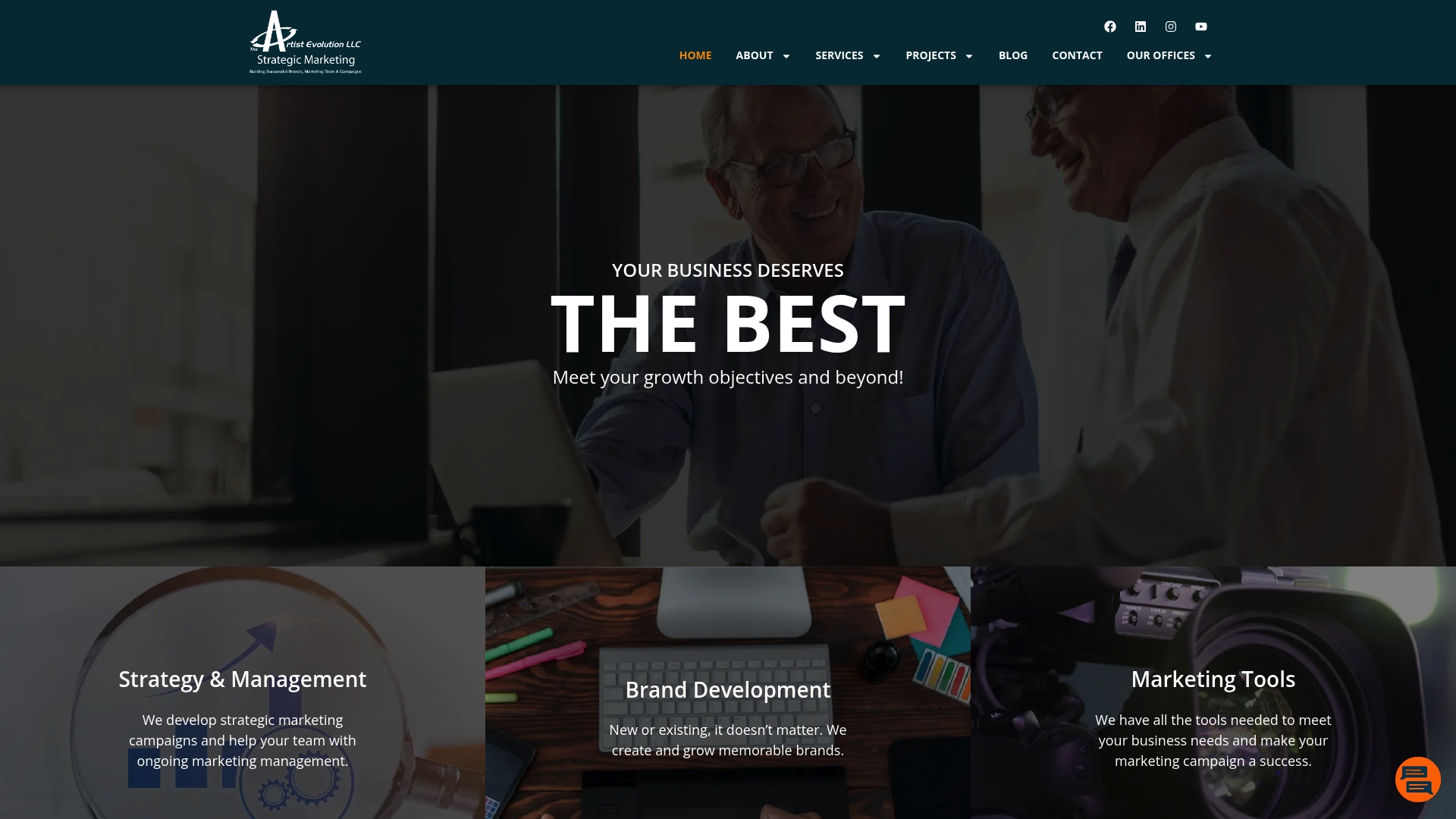
With extensive experience running brand development and campaign management for firms across healthcare, retail, legal, consulting, and CPG, the agency has built the case-study templates, LinkedIn playbooks, and one-page plans this article describes, repeatedly, for firms with the same trust and specificity problems. If your marketing plan currently lives in someone’s head rather than on one page, start with a marketing plan built for your firm’s specific positioning, or book a diagnostic through the marketing assessment service to see where your current pipeline is actually leaking.
Sources
- Go-to-Market Strategy for Professional Services: How to Win Clients in a Crowded Market
- The Core Of A Professional Services Marketing Plan
- Consultant Marketing Strategy: Build Authority and Pipeline | ClickMinded
FAQ
What Is the 3-3-3 Rule in Marketing?
The 3-3-3 rule generally refers to committing to three core channels, refined over roughly three months, before judging results, a pace that matches the 90-day foundation approach recommended for building a professional services marketing program.
What Is an Example of a Professional Service?
Legal counsel, accounting and tax advisory, management consulting, architecture, and financial advisory are classic professional services: expertise-based work sold on trust and judgment rather than a physical product.
What Are the 7 C’s of Service Marketing?
Definitions vary across marketing programs, but a common version includes customer, cost, convenience, communication, credibility, consistency, and care, all factors that matter heavily in professional services, where credibility and consistency often decide the sale.
What Are the 5 P’s of Service Marketing?
The 5 P’s typically extend the classic marketing mix to services: product, price, place, promotion, and people, with “people” carrying outsized weight in professional services since clients are ultimately buying trust in a specific team.
How Long Should a Professional Services Marketing Plan Be?
One to two pages, covering objective, audience, three tactics, an owner, a timeline, and KPIs; anything longer tends to sit unread rather than guide weekly decisions.