
Yes, Google Ads work for dentists, provided the account is built around specific procedures, tracked down to the phone call, and pointed at landing pages that match the search rather than a generic homepage. Get those three pieces right, and you should see calls within days, a usable data set in two to four weeks, and a stable cost per new patient by month two or three. Skip any one of them, and you’re paying for clicks with no way to know what they’re worth.
Here’s what to expect in the first quarter:
- Same-day visibility: your ads can start showing within hours of account approval.
- 2 to 4 weeks: enough click and call data to judge which keywords and ads are working.
- a few months of campaign data accumulation typically needed for stable cost-per-acquisition metrics: cost-per-acquisition numbers stabilize enough to plan a real budget.
Pro Tip: A 2026 dental marketing survey found that Google, combining Business Profile and Ads together, now drives close to a quarter of new-patient attribution. That’s too large a channel to run without a plan.
Key Takeaways
Google Ads produce measurable dental patient acquisition only when campaigns are structured by procedure, tracked through calls and GA4, and pointed at message-matched landing pages.
| Point | Details |
|---|---|
| Set realistic timelines | Expect visibility within days, usable data in 2 to 4 weeks, stable CPA by month 2 to 3. |
| Budget by procedure value | Plan $1,500 to $3,000 minimum for general practices, a prudent monthly budget range for multi-location practices or those focusing on implants and cosmetic work. |
| Structure by service | Separate campaigns for implants, emergency, general, cosmetic, and orthodontics improve bidding and reporting. |
| Track every call | Map unique call tracking numbers to campaigns and feed GA4 Enhanced Conversions for true cost-per-patient data. |
| Get expert account structure | Theartistevolution’s Clinic Playbook and dental case study show this structure applied to real accounts with measured traffic and lead gains. |
Table of Contents
- What Changed in Google Ads for Dentists in 2026
- How Much Do Google Ads Cost for a Dental Practice?
- How Should You Structure Dental Google Ads Campaigns?
- Which Keywords Should Dental Ads Target?
- What Bidding Strategy Works Best for Dental Ads?
- What Ad Copy and Extensions Perform Best?
- What Should the Landing Page and Tracking Setup Look Like?
- How Do You Optimize and Report on Dental Google Ads Weekly?
- What Are the Most Common Google Ads Mistakes for Dentists?
- What Does a Real Dental Google Ads Case Study Show?
- How Do Dental Practices Stay Compliant with Google’s Healthcare Ad Policies?
- What’s Overrated and What’s Underrated in Dental PPC Right Now
- How Theartistevolution Builds and Manages Dental Google Ads Campaigns
- Sources
What Changed in Google Ads for Dentists in 2026
The biggest shift isn’t the platform’s interface. It’s how much of the bidding and targeting decision-making now happens inside Google’s automated systems rather than in a human’s hands. AI-driven bid automation and intent-based ad grouping are doing more of the heavy lifting on account performance than they were even two years ago, and that cuts both ways. Automation reacts to patterns faster than a person scanning a dashboard once a week, but it also amplifies bad data. Feed it noisy or incomplete conversion signals and it will happily spend your budget chasing the wrong clicks with total confidence.
That’s why human oversight hasn’t gone away. Someone still has to define what counts as a real conversion, set the guardrails, and catch the moments when automation drifts.
Where does paid search fit against everything else? Google Ads is the fast lever. It buys visibility today. Your Google Business Profile and local SEO build the slower, compounding kind of visibility that ads can’t replicate. Treat the two as complementary, not competing, budget lines.
For campaign types, prioritize in this order:
- Search campaigns as the foundation. This is where intent is highest and control is greatest.
- Local Service Ads as a supplement. They often deliver cost-effective, pay-per-lead results when Google offers them in your area.
- Performance Max only once conversion tracking is clean. Feed it messy data and it will scale the wrong signals fast.
How Much Do Google Ads Cost for a Dental Practice?
Costs vary enormously by procedure and by how many competing practices are bidding in your zip code. General cleanings and checkups sit at the low end of cost-per-click. Implants, emergency dental care, and cosmetic procedures like veneers sit at the high end because the lifetime value of that patient justifies aggressive bidding from every practice nearby.
Industry benchmarking for dental PPC in 2026 puts the average conversion rate for well-structured campaigns around an average conversion rate around 4%, with cost per lead in the range typical for dental PPC campaigns. Cost per new patient for general services is typically within a moderate range, with implants and other high-value procedures costing more in competitive metro markets.
| Category | Typical CPC Range | Notes |
|---|---|---|
| General dentistry | a typical cost per click range on the lower end for general dentistry keywords | Highest volume, lowest cost per click |
| Emergency dental | $4 to $10 | High intent, urgency drives faster conversion |
| Cosmetic dentistry | a cost per click range indicative of competition for cosmetic dentistry | Strong competition in metro markets |
| Dental implants | a higher cost per click range common for dental implants reflecting their high value and competitiveness | Highest value per patient, most competitive |
| Orthodontics | a cost per click range typical for orthodontics keywords | Competes with national ortho chains |
Starter budgets need to match this reality. A single-location general practice testing the water should plan for at least a reasonable monthly starting budget for a single-location general dental practice testing paid search, split across two or three service campaigns. A multi-location practice or one leaning into implants and cosmetic work should budget a prudent monthly budget range for multi-location practices or those focusing on implants and cosmetic work or more to gather enough data for automated bidding to work. Daily budgets under $30 to $50 in competitive markets usually fail before they get a fair test. The algorithm needs volume to learn from, and a starved budget just produces random, inconclusive results.
How Should You Structure Dental Google Ads Campaigns?
Lumping every service into one campaign is the single most common structural mistake in dental PPC. It blends your budget, your bidding signals, and your reporting into a soup where you can’t tell which procedure is actually profitable. Separate campaigns by procedure and intent instead, and you get clean bid optimization plus reporting that tells you exactly where your money is working.
A workable taxonomy for most practices looks like this:
- Implants campaign — ad groups for “dental implants near me,” “single tooth implant cost,” “full mouth implants.”
- Emergency dental campaign — ad groups for “emergency dentist,” “tooth pain same day,” “broken tooth emergency.”
- General dentistry campaign — ad groups for “family dentist,” “dental checkup,” “teeth cleaning.”
- Cosmetic campaign — ad groups for “veneers,” “teeth whitening,” “smile makeover.”
- Orthodontics campaign — ad groups for “invisalign,” “braces for adults,” “clear aligners cost.”
Pro Tip: If your monthly budget is under $2,000, resist the urge to run all five. Consolidate into your two or three highest-margin, highest-demand services first. A thin budget spread across five campaigns learns nothing; the same budget concentrated on two learns fast.
Split budget in rough proportion to procedure value and search volume, not evenly. Implants and cosmetic work usually deserve a larger share per lead even at lower volume, because the case value covers a higher cost per acquisition. Only consolidate further if a campaign consistently gets fewer than 10 clicks a week; below that threshold, Google’s bidding systems don’t have enough signal to optimize meaningfully.
Which Keywords Should Dental Ads Target?
Four keyword categories consistently produce the highest-quality traffic for dental practices, and they’re worth prioritizing over everything else in your first month:
- Procedure plus location (“dentist in [city],” “implants [neighborhood]”) — the backbone of local intent.
- Emergency intent (“tooth pain now,” “emergency dentist open today”) — patients ready to book same day.
- Cost queries (“how much do veneers cost,” “dental implant price”) — researchers close to a decision.
- Branded defense terms, only if competitors are bidding on your practice name; otherwise skip this category entirely to save budget.
Start every new campaign on phrase match and exact match only. Broad match can find valuable, unexpected queries, but it also finds irrelevant ones fast, and without a strong negative keyword list already in place, it burns budget while you’re still learning what “good” looks like. Wait four to six weeks, until you have a solid negative list and a clear sense of your top converting queries, before testing broad match with a small, isolated budget.
Add these negative keywords on day one, before your first ad even goes live:
- jobs, careers, hiring, employment
- training, course, certification, schools
- free, cheap, DIY, at home
- salary, how to become
These terms attract job seekers and DIY researchers, not patients, and they’re consistently among the largest sources of wasted spend in dental accounts that skip this step.
What Bidding Strategy Works Best for Dental Ads?
Bidding strategy should evolve as your account collects data, not stay fixed from day one. Trying to run Target CPA before you have enough conversions is one of the fastest ways to see erratic, underperforming results.
- Weeks 1 to 4: data collection. Use Maximize Clicks or manual CPC with a cap. For most dental keywords, cap manual bids around $8 to $15 depending on procedure value, so you don’t overspend while still learning.
- After 30+ conversions: switch to automated bidding. Move to Target CPA or Maximize Conversions once you have enough conversion history for Google’s system to optimize against. Set your Target CPA relative to the lifetime value of a patient, not just the value of one visit; an implant patient can justify a CPA multiple times higher than a routine cleaning.
- Guardrails matter from the start. Use portfolio bid limits, hard bid caps within automated strategies, and conversion data filters that exclude junk leads (spam form fills, wrong numbers) from feeding the algorithm.
Automated bidding without these controls can quietly scale spend on a keyword that looks good on paper but is actually delivering low-value calls. Check weekly during the first month of any bidding strategy change.
What Ad Copy and Extensions Perform Best?
Ad copy for dental practices converts best when it mirrors exactly what the searcher typed and gives them a reason to act now rather than research further.
- Match the headline to search intent directly: “Emergency Dentist, Open Today” outperforms generic taglines every time.
- Include a clear call to action in the description: “Book Same-Day” or “Call for a Free Consult” beats vague brand language.
- Test urgency language for emergency and same-day campaigns specifically; it rarely helps general checkup ads and can feel out of place there.
Extensions do a surprising amount of the conversion work:
- Call extensions let mobile searchers dial directly from the ad, skipping the landing page entirely for high-urgency queries.
- Sitelink extensions should point to specific service pages, not your homepage.
- Structured snippets listing services (Implants, Whitening, Invisalign) help filter clicks before they cost you money.
- Callout extensions highlight practical differentiators: “Same-Day Appointments,” “In-Network with [Insurance],” “New Patient Specials.”
- Location extensions matter enormously for mobile searchers deciding between three nearby practices.
Pro Tip: Set ad scheduling to match your staff’s ability to answer the phone. Running ads at 11 p.m. when no one can pick up wastes budget and frustrates patients who won’t call back. Add bid modifiers to increase spend during your highest-booking hours instead.
What Should the Landing Page and Tracking Setup Look Like?
Sending every dental ad click to your homepage is the single biggest reason PPC accounts underperform. A single-purpose landing page built around message match consistently outproduces homepage traffic, because the visitor lands exactly where the ad promised.
Build every landing page around these essentials:
- Message match — the headline should echo the exact ad and keyword the visitor clicked.
- One clear call to action — book, call, or request a consult; never all three competing for attention.
- Trust signals — reviews, certifications, and years in practice placed above the fold.
- Before-and-after gallery — especially critical for implants, cosmetic, and orthodontic campaigns.
- Procedure-specific testimonials — a whitening testimonial on an implant page confuses the pitch.
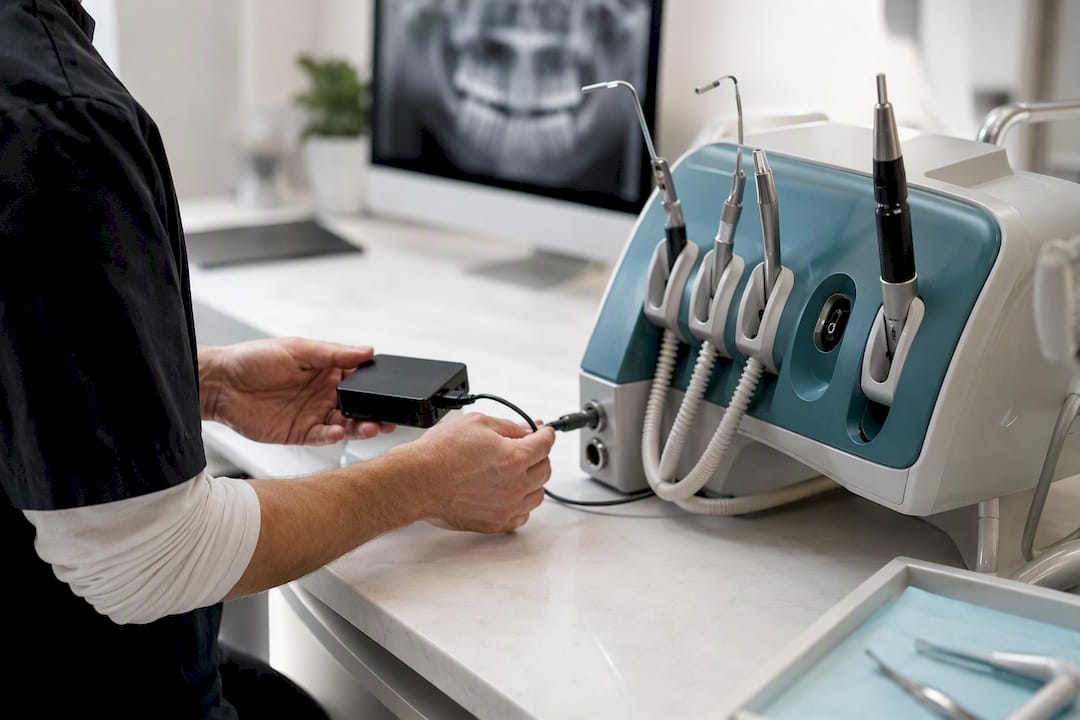
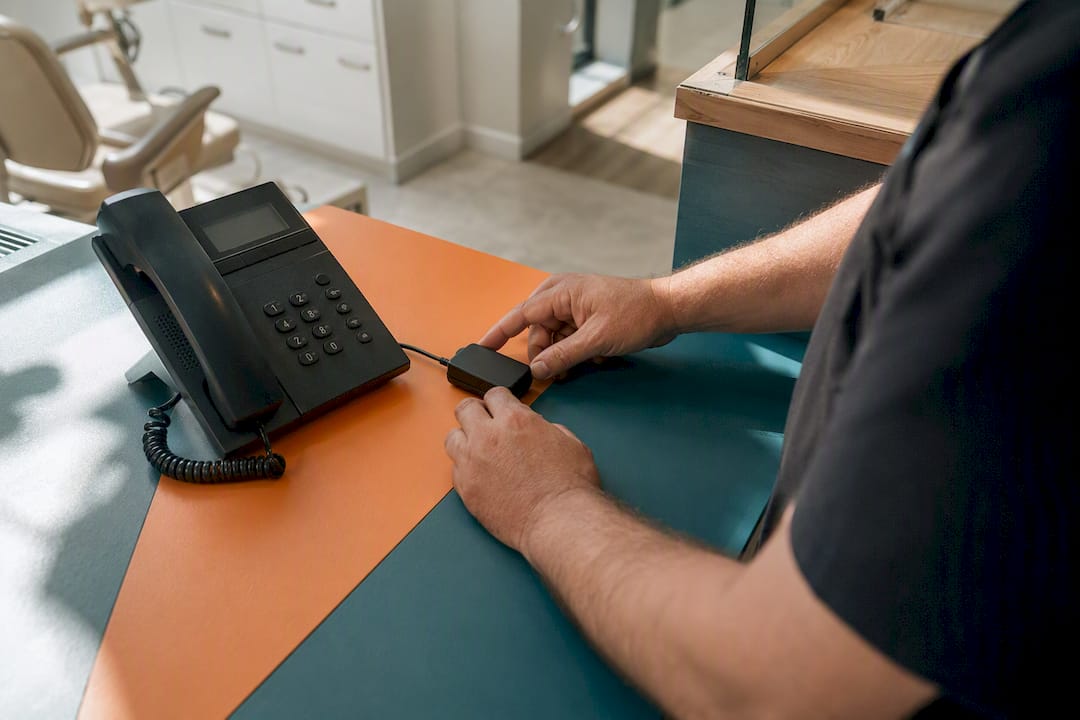
Tracking has to be just as deliberate. Mapping phone calls to the exact campaign and ad group that generated them, using a service like CallRail or a comparable call tracking platform, is what turns a click count into a real cost-per-patient figure. Without it, every optimization decision is a guess dressed up as data.
Layer GA4 with Enhanced Conversions on top of call tracking, and import offline bookings back into the platform so Google’s bidding systems learn from actual patients booked, not just form submissions. This is the difference between optimizing for leads and optimizing for revenue.
How Do You Optimize and Report on Dental Google Ads Weekly?
Consistent, small checks beat sporadic deep dives. A weekly and monthly rhythm keeps you ahead of waste without overreacting to a single bad day of data.
Weekly:
- Review the search terms report and add new negative keywords immediately.
- Check budget pacing across campaigns; a campaign that exhausts its budget by noon is losing afternoon volume.
- Track phone call volume and, where possible, call quality, not just call count.
Monthly:
- Compare conversion rate by landing page; a page underperforming its campaign average needs attention first.
- Check actual CPA against your target CPA per procedure category.
- Review ad copy performance and rotate out underperforming variants.
- Reassess bidding strategy if conversion volume has shifted meaningfully.
For testing, sequence matters. Start with landing page A/B tests since that’s where the biggest conversion-rate swings usually happen. Move to ad copy testing next, then audience and bid experiments last, once your foundation is stable. Running all three at once makes it impossible to know which change caused which result.
What Are the Most Common Google Ads Mistakes for Dentists?
Four mistakes account for most of the wasted dental ad spend we see, and each has a fast fix:
- Sending traffic to the homepage. Build a procedure-specific landing page for every campaign before it launches, not after.
- No call tracking in place. Set up unique tracking numbers per campaign and ad group in week one, not month three.
- Broad match with no negatives. Tighten to phrase and exact match immediately, then build your negative list before adding any broad match terms back.
- Ads running when the office is closed. Set an ad schedule matched to staffed hours, and layer in automated call screening for after-hours calls that do come through.
Each of these is fixable within a week without touching your monthly budget at all. The waste isn’t a spending problem. It’s a setup problem.
What Does a Real Dental Google Ads Case Study Show?
Theory only goes so far in PPC. The Google Ads for Doctors: A 2026 Clinic Playbook built by Theartistevolution walks through the same procedure-by-procedure structure covered above, applied to real medical and dental accounts, including the exact negative keyword lists, bid caps, and landing page checklists used in production.
The agency’s own dental office case study documents measurable gains in website traffic and lead volume after rebuilding a practice’s campaign structure and landing pages around individual services rather than one generic funnel.
- Campaign builds are segmented by procedure from day one, not consolidated and split later.
- Call tracking numbers are assigned per campaign and mapped into GA4 before launch, not bolted on afterward.
- Bid automation is only activated once enough clean conversion data exists to trust it.
The common thread across the playbook and the case study is sequencing: structure and tracking come first, automation comes second.
How Do Dental Practices Stay Compliant with Google’s Healthcare Ad Policies?
Google enforces stricter review standards for healthcare-related advertising than for most other verticals, and dental falls squarely inside that category. Ads referencing specific medical claims, before-and-after imagery for certain procedures, or pricing guarantees can trigger manual review delays or disapprovals if they aren’t handled carefully.
Practical steps that keep dental accounts compliant:
- Avoid absolute claims like “pain-free” or “guaranteed results” in headlines and descriptions; Google’s health-content policies flag overly definitive medical language.
- Keep before-and-after imagery in ads conservative and reserve the fuller gallery for the landing page, where context and consent disclosures can accompany it.
- Disclose any promotional pricing clearly, including whether it applies to new patients only or requires an in-office exam first.
- Verify your business through Google’s advertiser verification process for healthcare providers before launching; unverified accounts can face ad disapprovals or delayed delivery.
- Review state-level dental advertising rules alongside Google’s policies. Some states restrict specific claims about specialties or outcomes, and your ad copy needs to satisfy both layers.
None of this should require a legal review for every ad, but it does mean writing copy that describes services and invites action rather than making outcome promises. A dentist who wants specific regulatory language reviewed for their state should still consult their state dental board’s advertising guidelines directly, since those rules vary and change independently of Google’s own policy updates.
What’s Overrated and What’s Underrated in Dental PPC Right Now
The conventional advice treats keyword lists and bid strategy as the hard part of dental Google Ads. They aren’t. The hard part, and the part most practices skip, is tracking. A practice can have a mediocre keyword list and still see decent results if every call is tracked back to its source. A practice can have a flawless keyword list and still waste half its budget if it can’t tell which calls turned into booked patients.
Automated bidding gets oversold too. It’s a tool, not a strategy, and it’s only as good as the conversion data feeding it. Turning on Target CPA before you’ve got 30 clean conversions isn’t optimization; it’s guessing with extra confidence.
What actually moves the needle, in order: a landing page that matches the ad, a call tracking number that maps to that specific campaign, and a bidding strategy that only automates once there’s real data to automate against. Everything else, including ad copy polish and extension variety, matters at the margins. Get the tracking wrong and nothing downstream can be trusted, no matter how clever the campaign structure looks on paper.
— Derek
How Theartistevolution Builds and Manages Dental Google Ads Campaigns
Running dental PPC well means someone has to build the procedure-specific landing pages, wire up call tracking, watch the search terms report weekly, and adjust bids before a small problem turns into a wasted quarter. That’s a full-time job most practice owners don’t have room for between patients. Theartistevolution handles all of it: campaign builds segmented by service, landing pages with real message match, call tracking tied into GA4, and ongoing reporting that shows exactly what a lead actually cost.
The agency’s dental office case study and its Clinic Playbook show the same structure covered throughout this article, already applied and measured in production accounts. If your current campaigns are sending traffic to a homepage or you have no idea what a booked patient actually costs, start with a managed campaign strategy engagement and get your account rebuilt around the procedures that actually pay.
Sources
- Dental practice marketing 2026 — MouthWatch
- Google Ads for Dentists (2026) — playbook and benchmarks
- How to Run Google Ads for Dentists: A Step-by-Step Setup Guide — Cosmetics Growth
- Attracting Dental Patients with Google Ads — WhatConverts