
A content pillar strategy organizes 3 to 5 core themes into a hub-and-spoke network of pillar pages and cluster content, connected through deliberate internal links. The outcome is topical authority that search engines and AI systems recognize, plus a repeatable pipeline your team can run quarter after quarter instead of chasing one-off blog ideas. Once you understand the model, you can apply the workflow below to any topic.
TL;DR:
- Building fewer than three pillars risks repetitive content, while more than five can overload your team and dilute quality.
- Conduct a thorough content audit to identify current posts that can serve as cluster pages or need merging, to avoid redundancy.
- Ensure every cluster page links back to the pillar and vice versa, with descriptive anchor text that signals relevance and hierarchy to search engines.
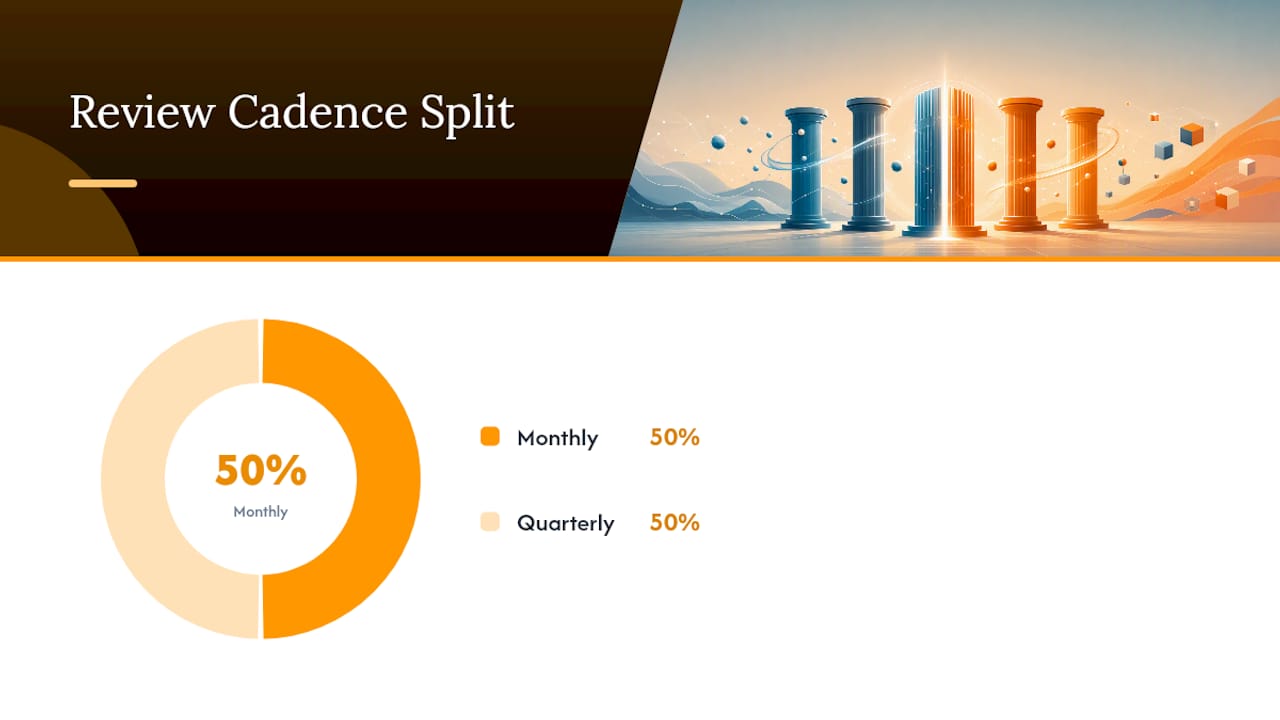
- Track pillar success using organic search rankings and internal click-through rates monthly, and review overall performance quarterly.
- Maintain ongoing pillar health through regular reviews and by writing to teach rather than sell, preventing loss of authority over time.
Table of Contents
- What Is a Content Pillar Strategy, and What Types of Pillar Pages Exist?
- Why Do Content Pillars Matter More Now, With AI-Driven Search?
- How Do You Build a Content Pillar Strategy Step by Step?
- How Many Pillars Should You Build, and Across Which Channels?
- How Do You Measure and Maintain a Content Pillar?
- What Mistakes Undermine a Content Pillar, and What Should You Check Before Publishing?
- How Does an Agency Turn This Into a Client-Ready Project Plan?
- A Publisher’s Honest Take on What Keeps Pillar Programs Alive
- Where to Read More on Topic Clusters and Pillar Architecture
- Build Your Pillar Program With Theartistevolution
- Sources
What Is a Content Pillar Strategy, and What Types of Pillar Pages Exist?
A pillar page is the anchor asset for one core topic. Cluster pages are the supporting articles that answer narrower questions tied to that topic, each linking back to the pillar and to each other. Together they form the hub-and-spoke model: one authoritative hub surrounded by spokes that reinforce it.
Three pillar formats cover most use cases:
- Guide pillars map an entire topic broadly (think “content marketing” as a category), ideal when you want to own a competitive, high-volume term.
- What-Is pillars define a concept precisely and serve top-of-funnel readers who are still learning vocabulary.
- How-To pillars walk through a process step by step, built for readers ready to act, and they tend to convert better because intent is already high.
Match the type to your goal. If you’re measuring brand awareness, a Guide pillar earns more impressions. If you’re tracking conversions, a How-To pillar tied to a service page usually performs better because the reader has already decided they have a problem worth solving.
Why Do Content Pillars Matter More Now, With AI-Driven Search?
Search has changed shape, making it essential to learn how to optimize content for AI search success. AI systems and answer engines increasingly reward sites that demonstrate depth across a topic rather than a single strong post, which is exactly what topic clusters are built to prove.
Internal linking is the mechanical difference between a blog archive and a real hub. A pillar with no reciprocal links to its cluster pages reads to a crawler, and to a language model summarizing your site, as a scatter of unrelated posts rather than a coherent authority. Structured internal linking is what converts isolated content into a defensible topical claim.
The business case follows naturally. A well-linked cluster spreads ranking equity across every page in the group, so a single strong spoke can lift the visibility of pages published months later. That’s the compounding effect pillar programs are known for, and it’s why teams that build this way spend less on net-new content over time.
How Do You Build a Content Pillar Strategy Step by Step?
Treat every pillar as a project, not a writing assignment. Here’s the sequence that holds up across industries, from a five-location retail chain to a regional healthcare group.
- Select and validate the topic. Start with a parent topic your business can credibly own, then confirm it has real traffic potential using audit signals like search volume and parent-topic reports so you’re not building a hub around a topic nobody searches.
- Audit existing content. Pull every post that touches the topic. Some become cluster pages as-is, some need an upgrade, and some should be merged or redirected to avoid competing with your own pillar.
- Write the pillar page with cluster-ready H2s. Draft the pillar’s headings first, then treat each one as a preview of a future spoke. This keeps the pillar comprehensive without becoming bloated.
- Build the cluster pages. Assign an owner to each spoke, set a publish date, and write each one to answer a single sub-question thoroughly rather than skimming five topics shallowly.
- Interlink with intent. Every cluster page links up to the pillar, the pillar links down to every cluster page, and related spokes cross-link to each other. Use descriptive anchor text, not “click here” or “learn more,” since anchor phrasing is part of how Search Engine Land’s build process signals topical relevance.
- Promote and track the launch. Push the pillar and its first spokes through email, social, and any owned channels, then log the launch date so you know when to expect organic movement.
Pro Tip: Keep URL patterns clean and nested where your CMS allows it (yoursite.com/topic/subtopic) instead of flat, disconnected slugs. It signals hierarchy to crawlers and makes the cluster easier for humans to navigate on mobile.
This sequence mirrors the five-step workflow Semrush recommends: choose, audit, write, publish, connect. Skipping the audit step is the most common shortcut agencies see, and it’s the one that causes the most rework later.
How Many Pillars Should You Build, and Across Which Channels?
A modest number of pillars is the operational sweet spot. Fewer than three risks repetitive content; more than five spreads your team too thin to maintain quality across all of them.
Define each pillar in one sentence before you build anything. “Our pillar on employee retention covers strategies for mid-size healthcare employers” is specific enough to guide every spoke decision that follows. Vague scope statements are why clusters drift off-topic by the fourth or fifth spoke.
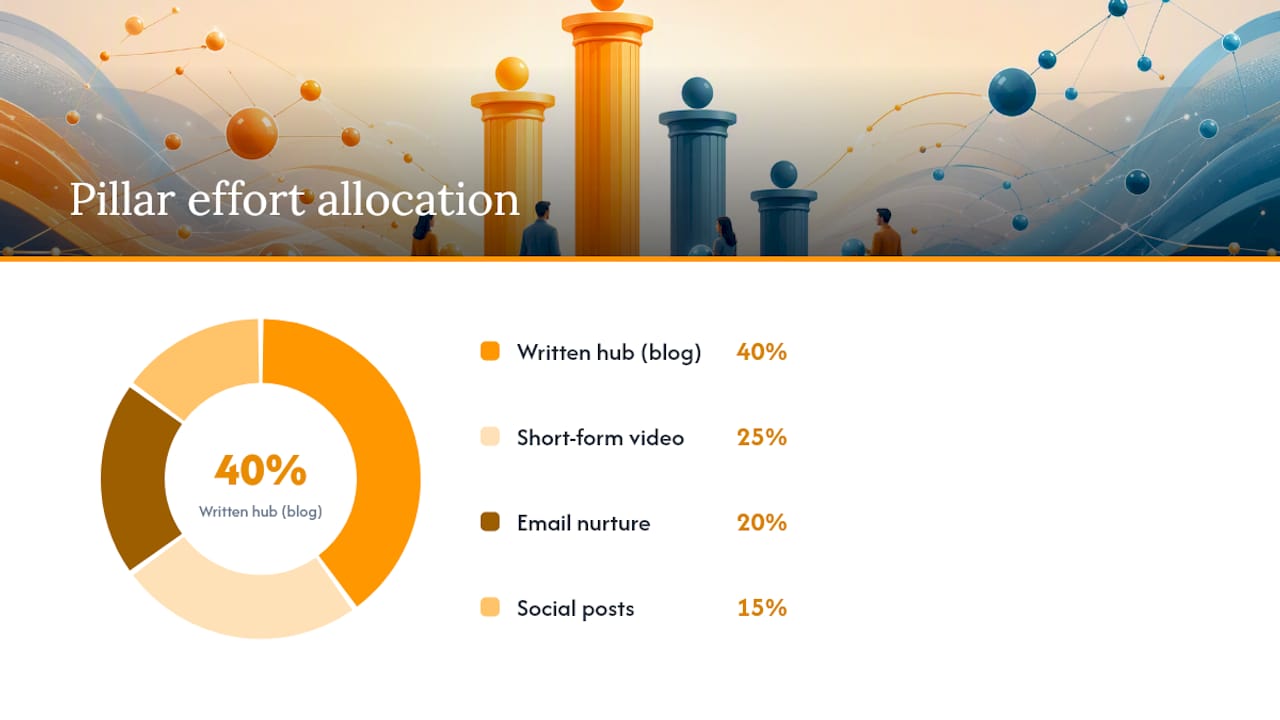
A workable mix across channels looks something like this:
- 40% of pillar effort goes into the written hub and its core cluster pages on the blog.
- 25% gets repurposed into short-form video or explainer content pulled directly from pillar sections.
- 20% feeds email nurture sequences that walk subscribers through the cluster over several weeks.
- 15% adapts into social posts, including LinkedIn threads built from individual cluster insights.
Batch production works better than writing spokes one at a time. Draft all cluster outlines in one sitting, then produce them in a single sprint. It’s faster, and it keeps voice and depth consistent across the whole cluster.
How Do You Measure and Maintain a Content Pillar?
Track pillar performance at the cluster level, not the individual post level. A single spoke with modest traffic can still be doing its job if it’s feeding qualified clicks into the pillar and, eventually, into a conversion page.
Timelines differ by channel. Social and email signals show up within days. Organic search is slower and can take up to six months to reflect the full authority of a new cluster, since it depends on link equity accumulating and crawlers revisiting the site.
| Metric | What it tells you | Review cadence |
|---|---|---|
| Organic visibility (rankings/impressions) | Whether the topic is gaining search authority | Quarterly |
| Internal click-through between spokes and pillar | Whether the hub-and-spoke links are actually working | Monthly |
| Conversions from How-To spokes | Whether bottom-funnel content is pulling its weight | Monthly |
| Total organic traffic to the cluster | Whether the pillar is compounding over time | Quarterly |
Run a quarterly review of every pillar. Expand a cluster when a spoke is ranking well but the topic clearly has more sub-questions worth covering; prune a spoke when it’s stagnant, redundant, or cannibalizing traffic from a stronger page in the same cluster.
What Mistakes Undermine a Content Pillar, and What Should You Check Before Publishing?
The most common failure is a thin pillar page that lists topics without covering any of them well enough to earn the links pointing to it. A close second is treating the pillar as a disguised sales page, which repels the top-of-funnel traffic it’s supposed to attract.
Orphaned spokes, pages published without a link back to the pillar, are an audit red flag that shows up constantly and quietly kills a cluster’s authority. So is pillar sprawl: six or seven pillars nobody has the bandwidth to maintain.
Before you publish, confirm:
- Every cluster page links to the pillar, and the pillar links to every cluster page.
- Anchor text describes the destination page, not a generic phrase.
- Canonical tags are set correctly if any content was consolidated from older posts.
- A promotion and launch-tracking plan exists before the publish button gets pressed.
How Does an Agency Turn This Into a Client-Ready Project Plan?
Run pillar builds as discrete sprints with named owners, not open-ended assignments. A typical engagement moves through discovery (topic and audit), production (pillar and spoke drafting), interlinking, and measurement, with an editor, an SEO lead, a content producer, and a designer each responsible for a phase.
Scope shifts by sector. A healthcare client needs pillars reviewed for regulatory accuracy before publish; a legal or retail client needs faster production cycles tied to seasonal demand. Collect client artifacts, brand voice guides, past campaign data, and any existing brand story assets, during discovery so case-study metrics have something concrete to reference later.
- Discovery: topic validation, competitive audit, resourcing plan.
- Production: pillar draft, cluster assignments, interlinking map.
- Measurement: quarterly KPI review, expansion or pruning decisions.
Pro Tip: Ask the client for their internal search data or support-ticket themes during discovery. Real customer language often reveals cluster topics that keyword tools miss entirely.
A Publisher’s Honest Take on What Keeps Pillar Programs Alive
Most pillar programs don’t fail at the strategy stage. They fail three months in, when the excitement of the launch wears off and nobody owns the maintenance calendar. The habit that actually sustains a pillar isn’t cleverness, it’s a standing quarterly review that someone is accountable for showing up to.
The second habit worth stealing: write pillars to teach, not to sell. The moment a pillar page starts reading like a landing page, it stops earning the links and shares that build authority in the first place. Save the pitch for the page the pillar links to.
Scaling across multiple clients or channels comes down to templates, not talent. A documented interlinking map and a shared cluster-tracking sheet let a small team maintain far more pillars than intuition would suggest is possible.
— Derek
Where to Read More on Topic Clusters and Pillar Architecture
For the theory behind hub-and-spoke content, HubSpot’s breakdown of topic clusters and Semrush’s guide to high-performing pillars are worth bookmarking. On linking architecture, Moz’s take on internal linking and Search Engine Land’s full build process go deeper than most agency blogs bother to. For AI-specific tactics, Theartistevolution’s AI SEO playbook covers how this framework applies to generative search.
Build Your Pillar Program With Theartistevolution
Theartistevolution turns the workflow above into a managed program instead of a side project your team squeezes in between other priorities. The agency handles topic validation, pillar and cluster production, interlinking, and the quarterly measurement cycle as one continuous engagement rather than a one-time deliverable.

That matters most for teams who’ve tried pillar strategies before and watched them stall after launch, exactly the maintenance gap most in-house teams hit around month three. Theartistevolution’s brand development and campaign management services are built to carry a pillar program past that point, with dedicated owners for production and measurement instead of a single overloaded marketer.
If you’re weighing whether your current content plan can support a real pillar structure, start with a marketing assessment to see where your existing content can be consolidated into your first hub.
Sources
- Topic clusters: The next evolution of SEO
- High-Performing Content Pillars: The Complete Guide
- Topic clusters and internal linking
- Topic clusters and pillar pages for SEO: The complete guide
- Content pillars: Types and how to use them