
The best brand photoshoot ideas start with a job for each image, not a Pinterest board. Decide where the photo will live (homepage, LinkedIn, a sales deck, a storefront), who needs to trust it, and what it should prove. Then pick shots that do that job: real people at work, your space, your process, and a few clean portraits. Below are 24 concepts sorted by purpose, plus a mood board method, wardrobe guidance, budget notes and the consent rules healthcare brands must follow.
TL;DR
- Plan around goals, not trends: tell your origin story, support a specific marketing goal, and stay visually consistent.
- Build a library, not a single portrait: individual portraits, work in progress, workspace, small-group candids and vertical assets for mobile.
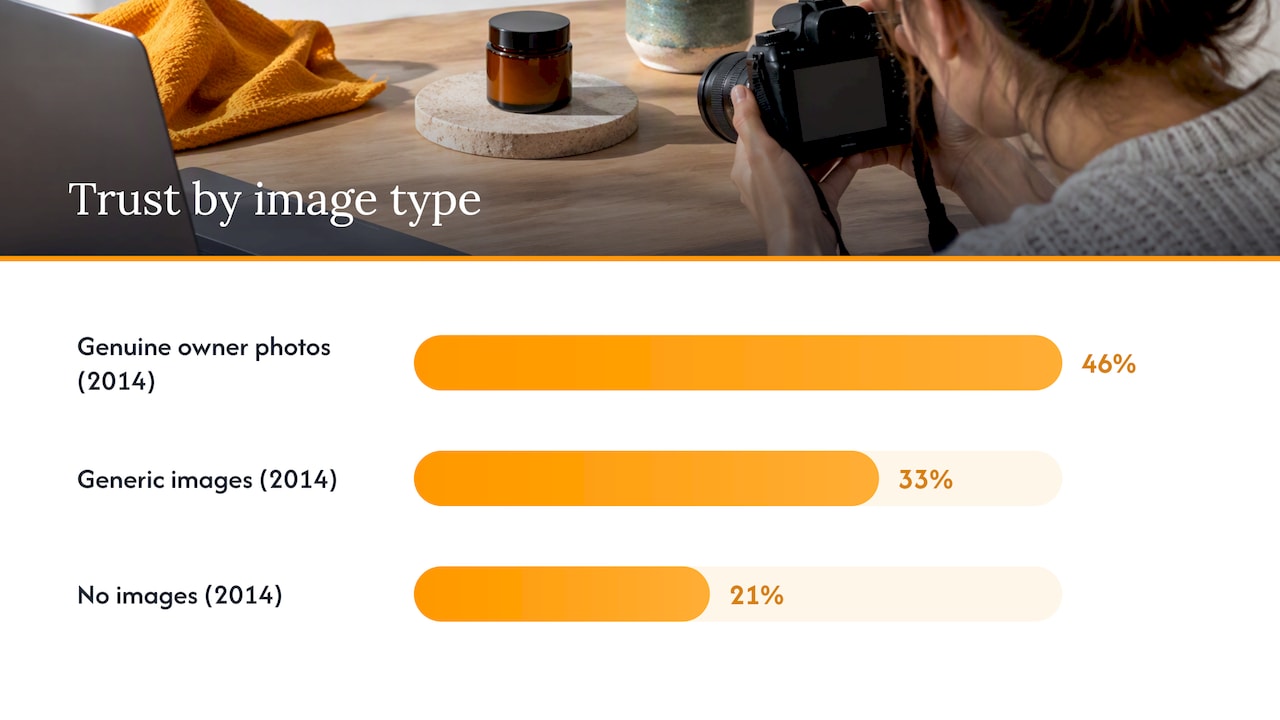
- Real beats generic: 46% of consumers trusted a business more when it showed a genuine photo of its owner, versus 33% for generic images (BrightLocal, 2014).
- Healthcare and dental brands need a written HIPAA marketing authorization before any patient appears in an image.
- A mood board and a written shot list are what separate a productive shoot day from a chaotic one.
Table of Contents
- Why a brand photoshoot is worth planning
- Start with the job, not the pose
- 24 brand photoshoot ideas by purpose
- Match ideas to your industry
- Build the mood board and shot list
- What to wear and how to prepare
- Healthcare and dental: consent comes first
- What does a brand shoot cost?
- Perspective: why we plan shoots backward from the campaign
- Turn the photos into results
- Need a shoot that fits your brand strategy?
- FAQ
- Sources
Why a brand photoshoot is worth planning
Photography is often the last thing a company budgets for and the first thing a prospect judges. A homepage full of stock smiles tells visitors nothing about who will actually answer their email.
The evidence points one way. BrightLocal’s study, from 2014 and so dated, found that genuine owner photos inspired the most trust (46%), generic images 33% and no images just 21%. More recent commentary from a corporate photography studio reports that replacing stock with authentic team photography on B2B landing pages can lift conversions by 30% to 45%. Treat that range as a vendor-reported estimate, not a promise: results depend on your page, offer and traffic.
There is also an AI angle. Getty Images research cited by The Drum found 76% of consumers worry they cannot tell real from fake, and advises that if a campaign should show real moments, AI-generated content is rarely the right fit. Nielsen Norman Group’s testing is more nuanced: AI-generated images did not reduce trust in the sites tested. Our read: AI can fill generic gaps, but a photo of your actual people is the one asset a competitor cannot generate.
Start with the job, not the pose
Photographers who specialize in branding keep returning to three questions: does the shot tell your brand story, does it support a marketing goal, and does it reflect your brand’s look and feel?
Before you collect a single idea, write down:
- Where will the images appear? Website hero, About page, service pages, LinkedIn, email signatures, print, trade show, packaging.
- Who is the viewer? A hospital procurement lead reads photos differently than a first-time dental patient.
- What should they conclude? “These people are experienced.” “This office is calm.” “The product is real.”
- What formats are needed? Horizontal for web banners, vertical for Stories and Reels, square for feeds.
This is the same discipline we apply in brand work: visuals follow strategy. If you are still defining that strategy, our brand story development case study shows how a story comes first and the imagery follows.
24 brand photoshoot ideas by purpose
The grouping below follows the five content buckets Snappr recommends for company shoots: consistent portraits, work in progress, environment, small-group candids and vertical assets. We added a sixth group for product and proof.
Portraits that look like your people
- Consistent headshots against one backdrop. Same lighting and crop for every team member, so the Team page looks like one company.
- Environmental portraits. Each person in their own workspace: the dentist at the operating chair, the attorney in the library, the buyer in the stockroom.
- The founder portrait. One strong, warm image of the owner for the About page, press kits and speaker bios. This is the image the BrightLocal trust finding is about.
- Hands-only portraits. Hands writing, typing, sketching or arranging product. Useful when someone is camera-shy, and easy to reuse in layouts.
- Candid laugh shots. Posed portraits followed by a minute of unscripted conversation. These often become the favorites.
- Role-in-action portraits. A consultant at a whiteboard, a pharmacist consulting a customer. The role is visible without a caption.
Work in progress
- Reportage of a real client meeting. With permission, shoot a normal working session. Clean, candid images of people genuinely working tend to read as credible, where overly produced, ad-like visuals invite skepticism.
- Process sequence. Intake, planning, delivery, follow-up, shot as a series you can drop into a “how we work” section.
- Over-the-shoulder screens. Dashboards, drafts and designs in progress (blur anything confidential).
- Whiteboard and sticky-note strategy sessions. Shows thinking, not just output.
- Tools and materials flat lay. Notebooks, samples, instruments or swatches arranged on a clean surface.
Your space
- Wide establishing shot. Lobby, waiting room, showroom or office, shot in good natural light with no clutter.
- Detail shots. Signage, door handles, textures, a well-organized shelf. They make a space feel cared for.
- Arrival moment. A person walking in or being greeted. It answers the unspoken question, “What will it feel like to visit?”
- Before-hours and after-hours light. Morning light through windows adds warmth that midday overhead lighting rarely does.
People together
- Small-group candids. Three or four colleagues talking, not looking at the lens.
- Walking and talking. A natural way to get movement and fewer stiff smiles.
- Team around a table. Coffee, laptops, real conversation.
- Customer or client interaction. With signed releases, show a handshake, a consultation or a fitting.
Product and proof
- Product in use. For retail and CPG, show the item in a real home, kitchen or store aisle rather than only on white.
- Packaging and unboxing. Sequence it for short video and carousel use.
- Behind-the-scenes making. Sourcing, assembling, quality checking.
- Local context. Your neighborhood, your block, your regulars. Local texture is hard to copy.
- Vertical set. Re-shoot your best five concepts in 9:16 at the same session. The common failure is having no usable content for mobile and social touchpoints.
Match ideas to your industry
| Industry | Lead with | Watch out for |
|---|---|---|
| Healthcare and dental | Staff in action, calm treatment spaces, equipment close-ups | Patient likeness without written authorization |
| Legal | Attorney portraits, consultation settings, community presence | Confidential files visible in frame |
| Consulting | Workshop reportage, whiteboards, founder portraits | Generic boardroom handshakes |
| Retail | Product in use, store-level local moments, staff picks | Inconsistent lighting across SKUs |
| CPG | Packaging, ingredient or process stories, lifestyle context | Shots that cannot be cropped for retail partners’ formats |
| Startups | Founders, product demo, the first office | Over-polished images that outpace the real company |
In trust-dependent fields like healthcare and legal, imagery of real people working matters most. High-contrast, text-heavy graphics are the kind of thing audiences increasingly scroll past.
Build the mood board and shot list
A mood board is a reference sheet that tells the photographer what you mean by “warm” or “modern.” Most brand-shoot professionals treat pre-production planning (color palettes, wardrobe and specific shot lists) as the difference between a chaotic shoot and a productive one.
Here is a simple process:
- Collect 15 to 25 references. Pull from your own past work, competitors’ categories, magazines and film stills, not only photographers’ portfolios.
- Sort into three groups. Keep what you love about light, what you love about composition, and what you love about mood.
- Pick a palette. Three to five colors drawn from your brand guidelines, with one or two accent tones for wardrobe and props.
- Delete imitations. If a reference is a specific person’s signature pose, cut it. You want your story, not a copy.
- Turn it into a shot list. Number each shot, note the purpose, orientation (horizontal or vertical), location and who is in it.
- Share it a week ahead. Your photographer can flag lighting or timing problems before the day.
A useful shot list line looks like this: “Shot 7. Founder with client at conference table. Vertical and horizontal. Purpose: About page and LinkedIn banner. Morning light by east window.”
What to wear and how to prepare
The short answer: wear what you actually wear for clients, then add one dressier option. One branding photographer advises bringing casual and formal looks that match your real day-to-day, and disagrees with the common advice to avoid color and pattern entirely.
Practical checklist:
- Bring two or three outfits. One everyday, one client-ready, one distinctive.
- Coordinate the team. Choose a palette rather than matching uniforms, unless you wear uniforms or scrubs every day.
- Steam and tailor ahead. Wrinkles and fit problems show in high-resolution images.
- Check logos and text. Avoid clothing with competing branding.
- Schedule hair, grooming and dental appointments a few days before, not the morning of.
- Declutter the location. Remove personal papers, stray cables and anything with confidential information.
- Plan a break. Tired teams look tired.
Healthcare and dental: consent comes first
If patients could appear in your images, or their information could be inferred, handle consent before the camera comes out. A privacy advisory firm summarizes that HIPAA’s marketing rule (45 CFR 164.508) calls for a signed authorization that specifically describes the marketing use, separate from the treatment consent form and not a checkbox buried in an intake packet. The authorization should state the scope of use and an expiration date.
What that means in practice:
- Shoot staff and models wherever possible, and use real patients only with a signed, specific authorization.
- Keep a copy of each release with the image file so you can find and pull assets if consent is withdrawn.
- Check charts, screens, name badges and appointment boards for protected information in the background.
- Have your compliance officer or healthcare attorney review your release form. State rules can add requirements beyond HIPAA.
This is general information, not legal advice. For your own forms, the person to ask is a healthcare attorney or your practice’s privacy officer.
What does a brand shoot cost?
Costs vary widely by market, crew size, usage rights and how many final images you need. For a sense of scale, one 2026 industry breakdown puts a small-to-mid one-day ecommerce fashion shoot in a major US market at $2,500 to $8,000, with branded campaigns running far higher. A team-and-workspace shoot for a service business is usually simpler than a fashion production, but the same cost drivers apply:
- Photographer’s day rate and editing time
- Number of locations and people
- Hair, makeup and styling
- Usage rights (web only, or print and advertising too)
- Number of retouched final images
Always get a written quote that lists how many edited images you receive, the usage rights, and the turnaround. Ask for vertical crops to be included.
Perspective: why we plan shoots backward from the campaign
We have spent more than 18 years building brands and running campaigns, and we see the same pattern. Companies book a photographer, get a gallery of attractive images, and then discover nothing fits the landing page, the ad format or the email header they need next month.
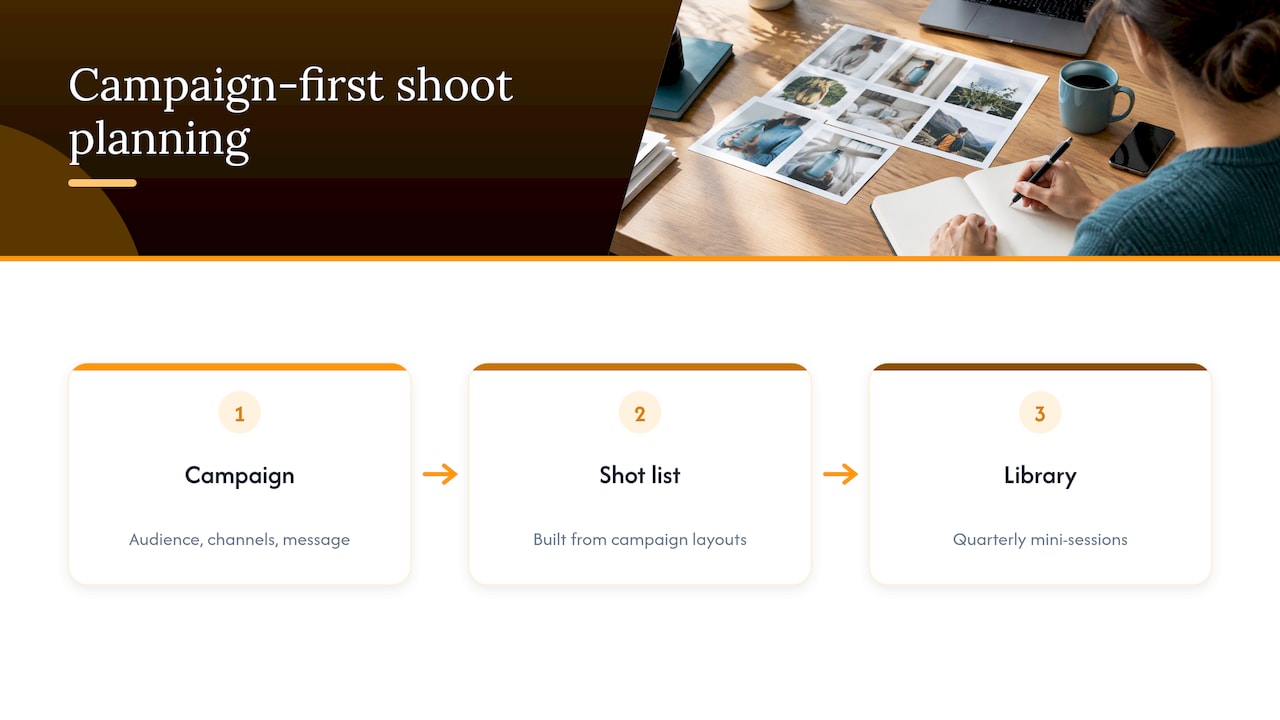
So we work backward. We start with the campaign: the audience, the channels, the message. Then we write the shot list from the layouts. A homepage hero needs negative space on the left. A paid social ad needs a vertical crop with the subject in the safe zone. A sales deck needs images that sit beside a number.
We also think authenticity is not a style, it is a business asset. Our clients in healthcare, legal and retail tell us prospects want to see who they are about to work with. When the photography shows real people in real settings, everything built on top of it, from PPC to SEO pages, has more to stand on.
One more point: treat the shoot as the start of a library. Plan quarterly mini-sessions to add new team members, seasonal content and fresh vertical formats rather than waiting three years for a full reshoot.
— Derek
Turn the photos into results
Images only perform when they are placed deliberately. A few places to put your new library to work:
- Website: hero, About, service pages and team page. If your site needs a redesign to show them properly, see our website design service.
- LinkedIn: real team images feed B2B posts and ads. Our LinkedIn Ads playbook covers how to use them.
- Local and retail: customer and store moments pair well with user-generated content. We outline how in how user-generated content turned local buzz into real retail impact.
- Brand storytelling: read the psychology of branding to see why consistent visuals build emotional connection.
Track what happens. Compare conversion rate and time on page for pages before and after new photography, and test one image swap at a time so you know what caused a change.
Need a shoot that fits your brand strategy?
If you would rather not guess at the shot list, our team can connect photography to your positioning, website and campaigns. Explore our brand development service, or start with a marketing assessment so the shoot is aimed at the right goals. Pricing is scoped to your project, so get in touch and tell us what you are trying to achieve.
FAQ
What should I wear for a branding photoshoot?
Wear what you would wear to meet a client, plus one dressier or more distinctive option. Pick solid or softly patterned pieces that fit well, avoid large logos, and steam everything the night before. Coordinate colors across a team rather than matching exactly.
How do I prepare for a brand photoshoot?
Write a shot list tied to where each image will appear, build a small mood board, and share both with your photographer a week ahead. Confirm locations, releases and a schedule with breaks. Declutter the space and check backgrounds for confidential information.
How much does a brand shoot cost?
It depends on crew size, locations, usage rights and the number of edited images. Ask for a written quote showing deliverables and licensing. One 2026 breakdown of ecommerce fashion shoots in major US markets shows $2,500 to $8,000 for a one-day production, and service-business shoots are often simpler.
Can I use AI images or stock instead?
For generic backgrounds, yes: Nielsen Norman Group found no evidence that AI images reduced trust in the sites it tested. For anything that shows your team, your space or real customer moments, original photography is the safer choice, since the point is to show who you really are.
Do I need patient releases for a dental or medical shoot?
Yes, if patients appear or are identifiable. HIPAA calls for a specific written marketing authorization, separate from treatment consent. Have a healthcare attorney or privacy officer review your form.
Sources
- BrightLocal: Business owner photo makes your local website more trustworthy
- MHF Creative: Corporate Photography vs Stock
- The Drum: The new brand playbook for AI-powered imagery
- Nielsen Norman Group: AI-Generated Images Can Perform as Well as Stock Photography
- Abby Murphy: 18 Brand Photoshoot Ideas
- Abby Murphy: What to Wear for Your Branding Photo Shoot
- Snappr: Company photoshoot guide
- North Privacy Advisors: The HIPAA Photo and Testimonial Trap
- Wearview: The Real Cost of a Fashion Photoshoot in 2026