
The fastest way to lift ROI is to pair an AI-accelerated measurement foundation, that is, a modernized marketing mix model plus always-on experiments, with a disciplined scenario-and-pacing practice. That combination, built on principles from IAB and applied consistently by experienced marketing agencies, replaces guesswork with evidence. Teams that adopt it typically see a faster decision cadence, less misallocated spend, and incremental revenue that holds up under scrutiny.
TL;DR:
- Combining AI-driven measurement and disciplined scenario planning accelerates decision-making, reduces waste, and drives sustainable incremental revenue.
- A quarterly cycle involving clear objectives, clean data, quick wins, and reversible changes ensures effective media spend optimization.
- Triangulating marketing mix modeling, experiments, and attribution provides a comprehensive view that enhances trust and accuracy in media decisions.
- Responsible AI use requires governance, transparency, human oversight, and clear ownership of recommendations to avoid risks and ensure reliable outcomes.
- Continuous testing and scenario analysis, supported by a centralized data infrastructure, are essential for maintaining growth and avoiding reliance on outdated assumptions.
Table of Contents
- A quarterly framework for media spend optimization
- Why MMM, incrementality tests, and attribution need each other
- Where AI genuinely helps, and where it needs a leash
- Channel rules: CTV, retail media, creator commerce, search, and social
- Running the testing calendar and scenario cadence
- The checklist that keeps the program running
- What agencies see on the ground that dashboards miss
- Getting your budget optimization program off the ground
- Where this guidance comes from
- Sources
- FAQ
A quarterly framework for media spend optimization
Treat every quarter as a cycle: set targets, clean the inputs, triage the budget, then test before you commit.
- Set objectives first. Map every KPI to a funnel stage (awareness, consideration, conversion) and attach a financial outcome, such as cost per acquisition or incremental revenue, so success is measurable.
- Centralize and clean the data. Before any model runs, unify spend data across platforms and enforce one taxonomy for campaign names, channels, and dates.
- Triage for quick wins. Flag underperforming line items and obvious waste, then simulate reallocations before touching live budgets.
- Apply reversible changes. Move budget in small, trackable increments tied to short validation windows, usually two to four weeks, so a bad call is cheap to reverse.
Guardrails matter as much as the moves themselves:
- Define acceptance criteria before a test starts, not after the results arrive.
- Require a second approval for any reallocation above a set budget threshold.
- Build a rollback trigger into every scenario, tied to a specific performance drop.
Pro Tip: Log every reallocation decision with its rationale; six months later, that log becomes your fastest audit trail.
Why MMM, incrementality tests, and attribution need each other
No single method tells the whole story. Marketing mix modeling works as the portfolio planner, showing how channels interact at the budget level. Experiments serve as the causal validators, proving whether a channel actually drove the outcome. Attribution remains the funnel map, showing where credit flows along the path to conversion. Modernizing MMM best practices call this triangulation the standard: each method has a distinct strength, and reconciling them produces recommendations teams actually trust.
Modern MMM differs from the old annual refresh. Best practice now means:
- Increasing model cadence from annual to monthly, or near real-time where the data supports it.
- Documenting provenance for every imputed or estimated input so analysts can trace where a number came from.
- Using experiments as calibration anchors for model coefficients, then recording how those priors shifted the estimates.
- Building in a path to represent channels with thin data, rather than excluding them outright.
Choosing the right experiment depends on the question. Geo-based holdouts work well for broad reach channels, lift tests suit platforms with strong targeting controls, and model-based counterfactuals fill gaps where a clean holdout isn’t feasible. The IAB Guidelines for Incremental Measurement in Commerce Media frame the decision around three principles: credible counterfactuals, control for bias, and separation of signal from noise.
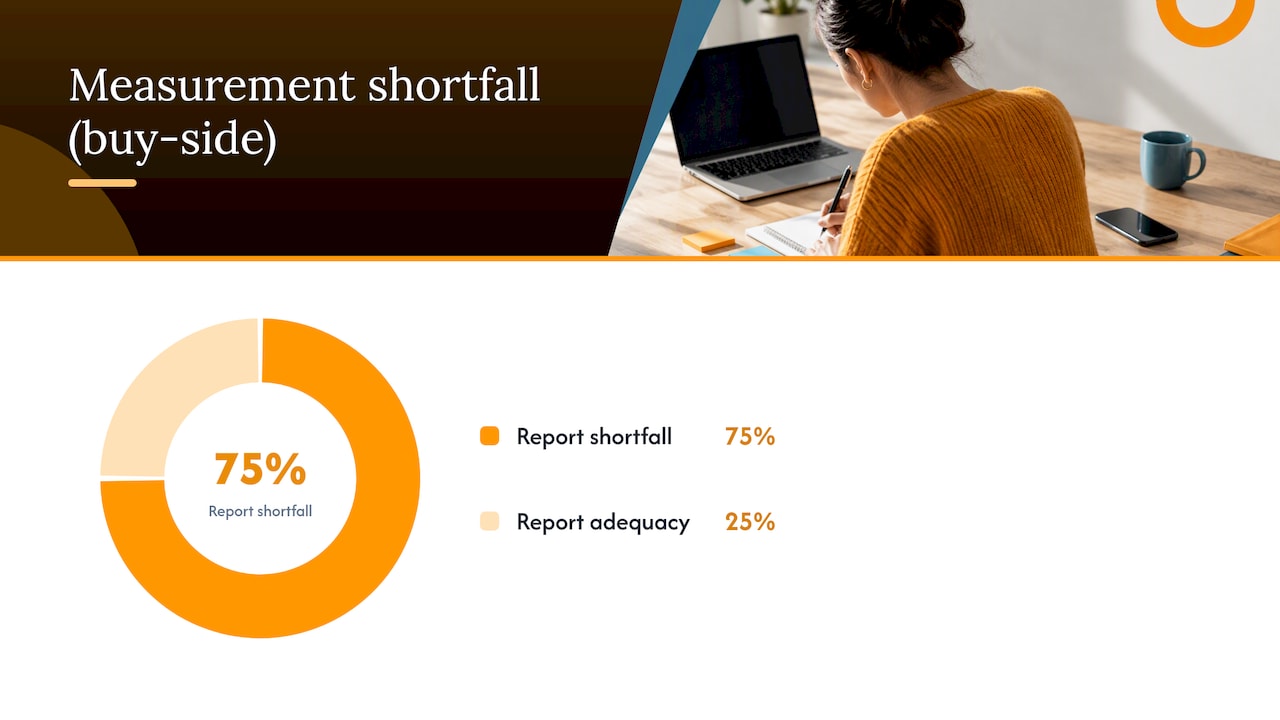
One figure to anchor this: up to 75% of buy-side respondents say current advanced measurement approaches fall short on rigor, timeliness, trust, or efficiency, which is exactly the gap triangulation is built to close.
Where AI genuinely helps, and where it needs a leash
AI earns its place in three spots: cleaning and structuring spend data, refreshing MMM outputs closer to real time, and running scenario simulations fast enough to inform weekly decisions. The same IAB State of Data 2026 research estimates AI can increase measurement frequency significantly and could unlock substantial media value if teams adopt it responsibly.
Responsible adoption means governance, not blind trust:
- Attach a provenance note to every AI-generated imputation so a human can see what was estimated versus observed.
- Run sensitivity checks before accepting any model update that shifts budget recommendations meaningfully.
- Keep a human-in-the-loop approval step for any automated change above a defined dollar threshold.
- Write contract language with any AI vendor that spells out who owns the risk if a recommendation underperforms.
AI’s role in modern marketing works best when it feeds directly into existing planner workflows and dashboards, rather than living in a separate tool nobody checks.
Pro Tip: Treat every AI-generated budget recommendation as a draft, not a decision, until a human signs off on the reasoning behind it.

Channel rules: CTV, retail media, creator commerce, search, and social
Channels with thin data still need fair treatment in the model, just through different inputs.
- CTV and streaming: Use aggregated placement proxies and reach and frequency calibration instead of waiting for granular, user-level data.
- Retail media: Pair TACoS as a sales-alignment metric with short lift tests to confirm the spend is driving incremental sales, not just capturing existing demand.
- Creator and influencer: Measure at the cohort level using proxies, since individual-level attribution is usually too weak to trust on its own.
- Search and social: Preserve budget in channels with proven, stable returns, and route new test dollars toward emerging formats where the streaming and retail media growth trend suggests upside.
The 90-day retail media incrementality approach is a workable template for any channel where attribution alone won’t settle the question.
Running the testing calendar and scenario cadence
An always-on calendar keeps measurement honest instead of reactive.
- Name each experiment, its target KPI, and its decision window, typically a four to eight week holdout for channel-level incrementality.
- Run weekly health checks on live campaigns to catch pacing issues before they compound.
- Run monthly scenario simulations, modeling conservative, base, and aggressive reallocation cases against the same KPI targets.
- Refresh the MMM monthly or quarterly, with a sensitivity check every time, per MMM modernization guidance.
- Set approval thresholds for each scenario tier and define the rollback rule before the scenario ever goes live.
The incrementality testing guide walks through geo-test and holdout design in more depth for teams building their first calendar.
The checklist that keeps the program running
A short checklist separates teams that sustain this process from those that abandon it after one quarter.
- Centralized data store with versioned pipelines and a documented taxonomy register.
- A live experiment calendar synced to the MMM refresh cadence.
- Scenario tool integration with an approvals matrix for every budget tier.
| Metric | What it shows |
|---|---|
| Incremental revenue | Revenue tied directly to validated test results |
| ROAS by channel | Return on ad spend broken out per platform |
| Recommendation acceptance rate | Share of AI or model suggestions a team actually implements |
| Time-to-action | How quickly a validated insight becomes a live budget change |
Adoption itself is worth tracking too: how many recommendations get accepted, how much planning time that frees up, and how much revenue traces back to model-driven changes.
What agencies see on the ground that dashboards miss
After many years managing campaigns across retail, healthcare, legal, and entertainment, one pattern holds: the teams that win aren’t the ones with the fanciest model, they’re the ones who test consistently and act on what the test says, even when it contradicts a favorite channel. A 90-day retail media incrementality review often surfaces a channel quietly underperforming its reputation, and PPC management outcomes tend to improve fastest once budget decisions stop running on last quarter’s assumptions. Staffing a dedicated analyst, or partnering with one, is usually what separates a one-time audit from a running program.
— Derek
Getting your budget optimization program off the ground
Running this playbook well takes centralized data, a testing calendar, and someone watching the scenarios every week, which is exactly where a dedicated team earns its keep. The Artist Evolution’s Campaign Strategy and Ongoing Management service builds that infrastructure around your existing spend, while Pay-Per-Click Management handles the platform-level execution once reallocations are validated.

If retail media is part of your mix, the same team can run a 90-day incrementality review to confirm what’s actually driving sales. Services that support this work include:
- Strategy and Management for the overall measurement and reallocation framework.
- Marketing Tools for the dashboards and scenario tracking that keep decisions on schedule.
- Search Engine Optimization Agency services when organic and paid budgets need to be planned together.
Request a marketing assessment to see where your current spend is leaking value before committing to a full program.
Where this guidance comes from
This playbook draws on IAB’s State of Data 2026, its incremental measurement guidelines, MMM modernization best practices, channel ROI data from Keen Decision Systems, and Google Ads recommendation documentation, with additional context from analytics-driven ROI research.
Sources
- Modernizing MMM: Best practices for marketers
- Data: Social Media and Streaming Video Delivered Strong ROI for Marketers in 2025 (Keen Decision Systems / BusinessWire)
- Google Ads API: Recommendations
FAQ
What is the 3-3-3 rule in marketing?
Definitions vary across marketing teams, and no major industry body cited in this guide defines a single standard “3-3-3 rule.” Treat any version you encounter as a team-specific heuristic rather than an established measurement framework.
What is the 40-40-20 rule in marketing?
It’s a planning guideline, not a measured output of any formal study referenced here.
What does the 70:20:10 rule mean in advertising?
It’s commonly used as a starting framework for balancing stability with growth, rather than a fixed industry standard.
What is the 3-2-2 method for ad campaigns?
Definitions of a “3-2-2 method” vary by source and aren’t tied to a documented industry framework in the materials behind this guide. If you’ve seen a specific version referenced elsewhere, treat it as that source’s own heuristic rather than a universal rule.
How often should a marketing mix model be refreshed?
Modern best practice calls for refreshing a marketing mix model monthly or near real-time where data supports it, a shift from the older annual cadence, according to MMM modernization guidance. Each refresh should include a sensitivity check before any budget recommendation is accepted.